Anyone who has complained that their "monthly" recharge dies before the month does is right. A 28-day prepaid pack renews 13.04 times in a 365-day year, so you buy thirteen packs to cover twelve months. On Jio's ₹349 plan that is ₹4,549 a year against ₹4,188 if the same price bought a calendar month. Around ₹361 extra, for nothing.
Everyone knows that arithmetic by now, and it produced advice that circulates every few months: switch to the 30-day plan and stop paying the thirteenth recharge. TRAI even requires operators to offer one. I checked the actual prices, and the advice is wrong on the numbers as they stand in September 2026. The 30-day plans exist, but they are priced high enough that switching costs more than the extra cycle ever did.
Table of contents
- Where the thirteenth recharge comes from
- TRAI's 30-day plan requirement
- 30-day plan prices
- Cost per day across validities
- Break-even price for a 30-day plan
- Long validity plans
- Unused daily data
- FAQ
- Sources
Where the thirteenth recharge comes from
365 divided by 28 is 13.04. Twelve 28-day cycles cover 336 days, which leaves 29 days of the year unpaid for. So you recharge a thirteenth time, and that one only carries you to day 364.
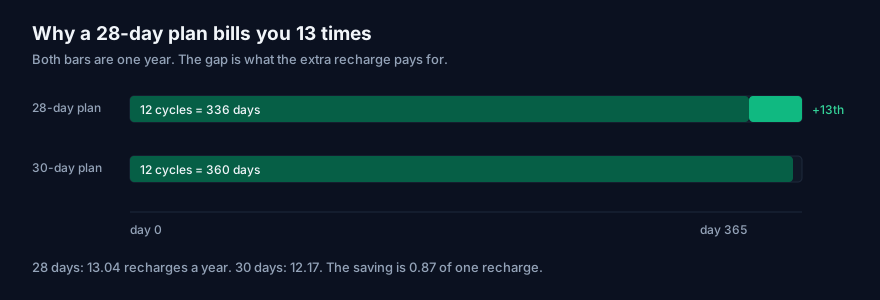
The number to look at is 0.87, not thirteen. Moving to the longer cycle saves you 0.87 of a recharge over the year, because 30 days isn't a calendar month either. Twelve such cycles cover 360 days, so you still need a fraction of a thirteenth. That is the whole prize, and it is smaller than "you are paying for an extra month" suggests.
On the ₹349 plan, 0.87 of a recharge is about ₹304. Worth having if the 30-day plan costs the same. It doesn't.
TRAI's 30-day plan requirement
The Telecom Tariff (67th Amendment) Order requires every operator to offer at least one plan voucher, one special tariff voucher and one combo voucher with 30-day validity. In December 2025 the Department of Telecommunications went back to the operators and asked them to promote those plans, on the grounds that almost no one knew they existed.
The plans are mandated, but the mandate says nothing about price. An operator complies by listing a 30-day option at whatever number it likes.
30-day plan prices
Here are the 28-day and 30-day entries on the two big networks in September 2026, on comparable 1.5 to 2 GB/day tiers.
| Plan | Validity | Price | Cost per day | Yearly |
|---|---|---|---|---|
| Jio, 2GB/day | 28 days | ₹349 | ₹12.46 | ₹4,549 |
| Jio, 1.5GB/day | 30 days | ₹479 | ₹15.97 | ₹5,828 |
| Airtel, 2GB/day | 28 days | ₹349 | ₹12.46 | ₹4,549 |
| Airtel, 1.5GB/day | 30 days | ₹509 | ₹16.97 | ₹6,193 |
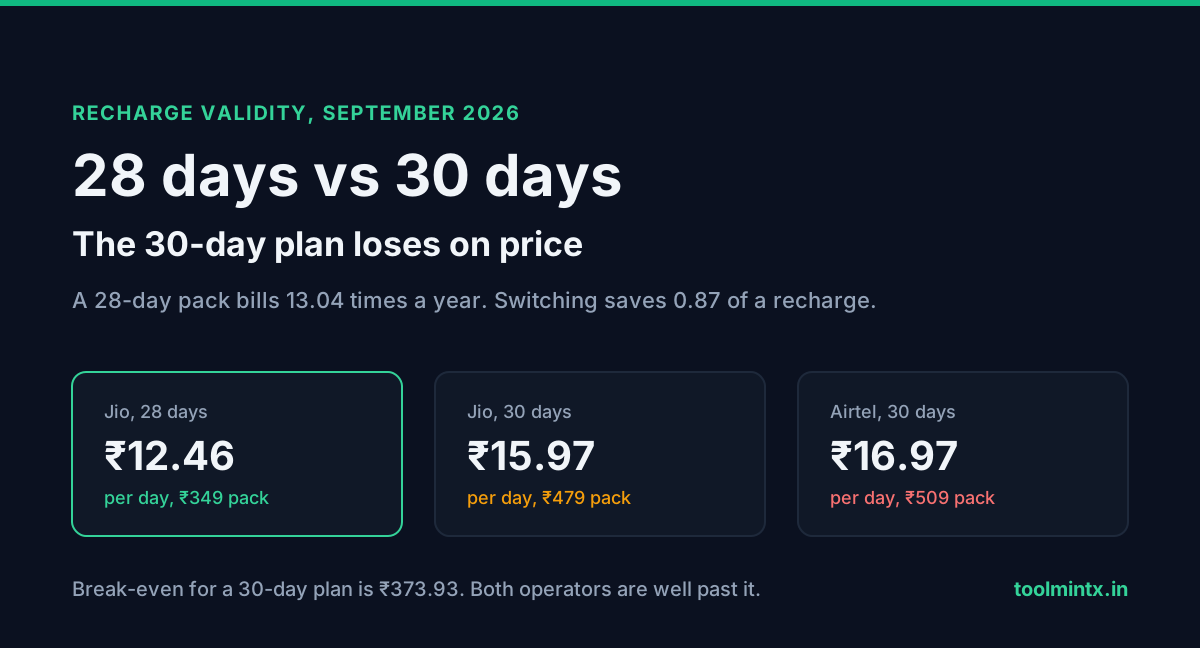
Jio's longer option costs 28% more per day than its 28-day sibling, and Airtel's costs 36% more. You go looking for a ₹304 saving and hand over ₹1,278 to find it. Both replacements also carry less daily data than the pack they replace.
Cost per day across validities
Sticker price tells you nothing when the validity differs, which is why plan pages lead with it. Divide by days and the comparison stops flattering the longer pack.
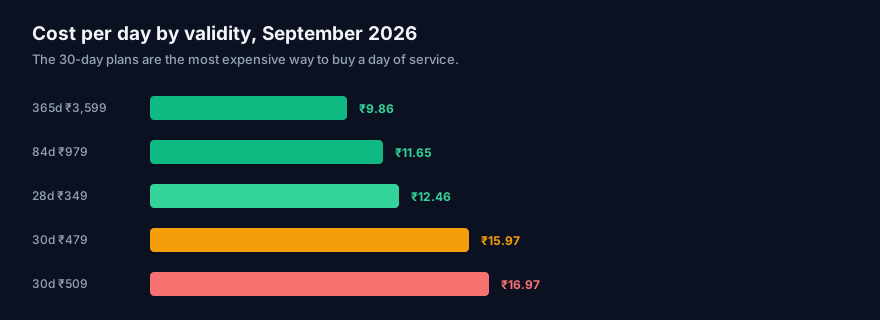
Our Recharge Calculator does this on your own numbers. Enter the amount and the validity printed on your plan, and it annualises the mobile pack on its real cycle, counts DTH and broadband as calendar months (12 payments a year, whatever your mobile validity is) instead of scaling them by your validity, and shows the cost per day. Compare that figure and ignore the rest.
Break-even price for a 30-day plan
Operators price the 30-day option freely, so work out your own ceiling before you switch. The longer cycle wins only while its cost per day is lower. 30/28 is 1.0714, so the ceiling sits about 7% above the shorter plan's price.
At ₹349 for 28 days, break-even is ₹373.93. Above that you pay more for each day of service than before. Jio wants ₹479 and Airtel wants ₹509, both far past the line, so at current prices you should stay where you are on these two networks.
Recheck whenever your plan changes: multiply the 28-day price by 1.07 and compare.
Long validity plans
Bulk is the cheapest way to buy service. ₹979 for 84 days works out to ₹11.65 a day, about 6% under the ₹12.46 of the shorter pack. Jio's ₹3,599 anniversary annual plan is ₹9.86, roughly 21% below that rate, and the validity question disappears because 365 days is the whole year.
The trade-off is real. You pay a large amount up front, you can't port out mid-plan without losing the balance, and you are betting that your operator's coverage stays acceptable for a year. If you've moved cities recently or you're waiting on a 5G rollout, a 28-day pack is worth its small premium for the freedom to leave.
For a household with several SIMs, add mobile amounts together only when the validities match. A ₹349 pack on 28 days plus a ₹3,599 annual pack can't be annualised on one shared cycle, so run them separately and add the yearly totals.
Unused daily data
People argue about validity, but unused data is where the money goes. Daily data doesn't roll over on any of these plans. A 2 GB/day pack on 1.2 GB of genuine daily use throws away 0.8 GB every day of the year, roughly 292 GB you paid for and never touched. Jio's ₹299 plan at 1.5 GB/day is ₹50 cheaper per cycle, or ₹652 a year, and a user like that loses nothing.
Check Settings, then Network and data usage, on your phone for a real monthly figure before you accept the next upsell. The Mobile Data Usage Calculator converts your streaming, calling and browsing habits into a GB/day number, so you can match a plan to actual usage instead of the tier the operator's app pushes.
Two other bills usually dwarf the recharge argument, and both are annualised properly instead of scaled by a mobile validity: your electricity bill on your state's slab rates, and any DTH or broadband subscription you have stopped using. The thirteenth recharge is ₹349. A forgotten ₹350 DTH connection is ₹4,200 a year.
FAQ
Why does a 28-day plan mean 13 recharges a year?
365 divided by 28 is 13.04. Twelve cycles only cover 336 days, so you need a thirteenth recharge, and even that reaches only day 364.
Should I switch to a 30-day plan to avoid it?
Not at September 2026 prices. Jio charges ₹479 against ₹349 for the shorter pack, and Airtel ₹509. Both work out costlier per day than what they replace, and both include less daily data.
What is the highest price worth paying for a 30-day plan?
About 7% above your 28-day price, because 30/28 is 1.0714. On a ₹349 plan that ceiling is ₹373.93.
Is TRAI forcing operators to offer 30-day plans?
Yes. The Telecom Tariff (67th Amendment) Order requires at least one plan voucher, one special tariff voucher and one combo voucher with 30-day validity, and DoT asked operators again in December 2025 to promote them. The order doesn't cap the price.
Sources
- TRAI Telecom Tariff (67th Amendment) Order, 30-day validity voucher requirement, read 9 September 2026
- Jio prepaid recharge plans, ₹349, ₹299, ₹479, ₹979 and ₹3,599 plan entries, read 9 September 2026
- Airtel prepaid recharge plans, ₹349, ₹509 and ₹979 plan entries, read 9 September 2026