Qwen3.6-27B Is the Open Coding Model to Test First for Local Workflows
Qwen3.6-27B is a practical open-weight coding model with long context and clear serving paths. What changed and how to evaluate it in real local workflows.
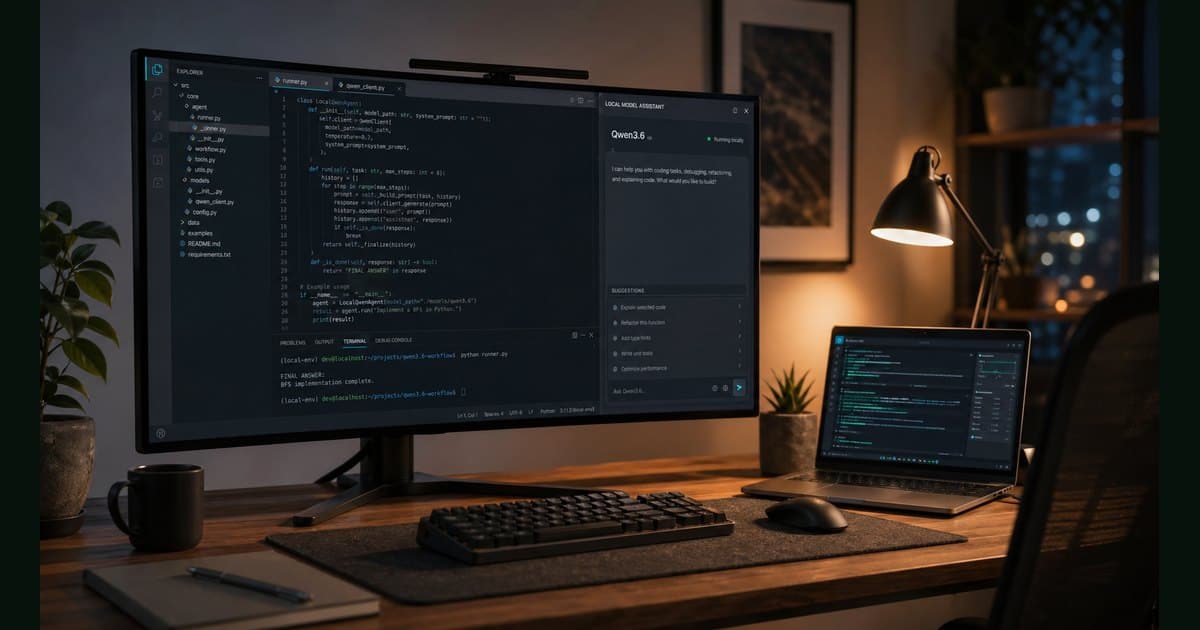
Qwen3.6-27B stands out because it is not only a benchmark update. It is packaged like a model that teams can actually integrate into day-to-day coding and local inference stacks.
As of April 2026, it is available on Hugging Face and appears in Ollama's library, which shortens the path from model release to practical testing.
What Actually Changed
The official model card highlights four practical themes:
- stronger agentic coding behavior for repo-level tasks
- thinking-preservation guidance for multi-step workflows
- native 262,144 token context, with recommendation to keep at least 128K when possible
- clear serving paths via SGLang and vLLM
This makes Qwen3.6-27B relevant for developers who need continuity across long prompts, logs, and cross-file context.
How to Run It Quickly
Fast path: Ollama
For a quick local test loop:
ollama run qwen3.6:35b
Serving path: SGLang
python -m sglang.launch_server \
  --model-path Qwen/Qwen3.6-27B \
  --port 8000 \
  --tp-size 8 \
  --mem-fraction-static 0.8 \
  --context-length 262144 \
  --reasoning-parser qwen3
Serving path: vLLM
vllm serve Qwen/Qwen3.6-27B \
  --port 8000 \
  --tensor-parallel-size 8 \
  --max-model-len 262144 \
  --reasoning-parser qwen3
Dense vs MoE: Why It Matters
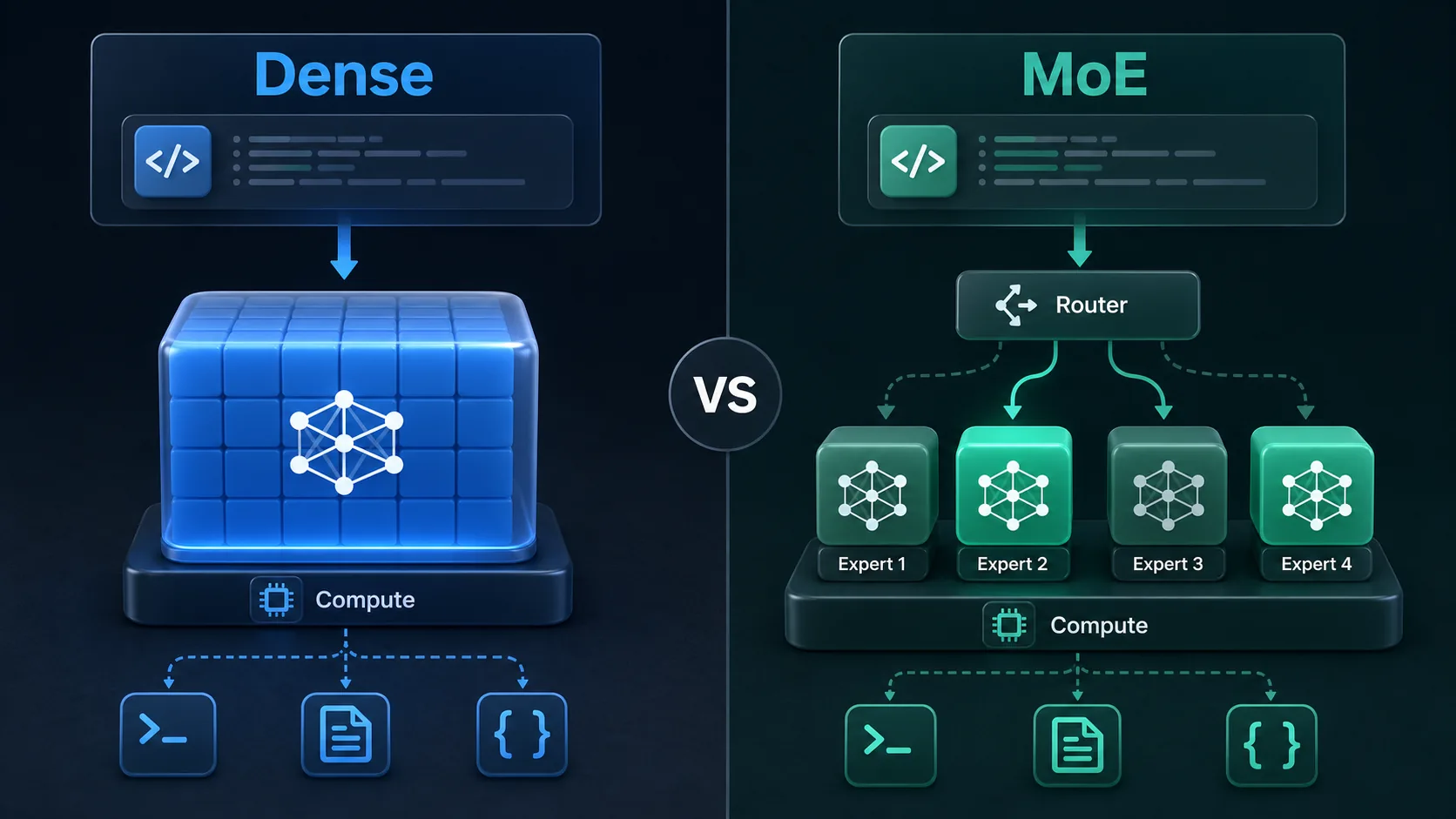
Qwen3.6 gives teams architecture choice. The 27B model is dense, while 35B-A3B is MoE. That choice affects latency behavior, serving complexity, and hardware pressure.
- dense models are often simpler to reason about operationally
- MoE variants can reduce active-parameter cost in some traffic patterns
The right pick depends on your workload: interactive coding assistant, internal API service, or batch repository analysis.
What to Test in a Real Repository
A coding model should not be judged only by a clean prompt or a single benchmark task. The better test is a repository you already know, with a failing test, an unclear module boundary, and enough context to expose whether the model can follow project conventions.
Start with a small bugfix where you can compare the model's reasoning against the actual patch. Then try a multi-file refactor, a test-writing task, and a documentation update. Watch for whether Qwen3.6 preserves constraints across turns, respects existing APIs, and avoids inventing files or dependencies that do not belong in the codebase.
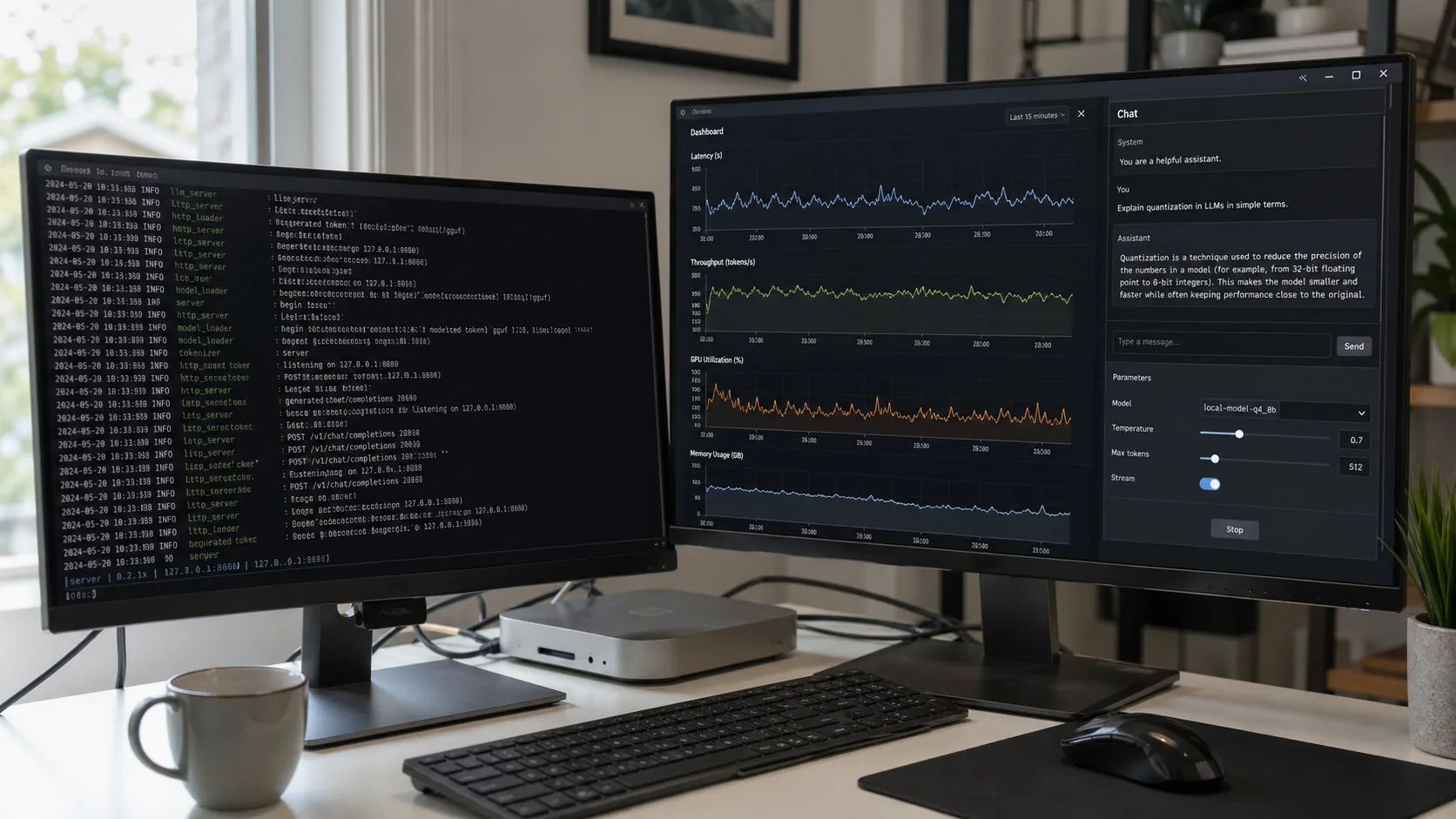
Local serving also changes the evaluation. Measure first-token latency, sustained decode speed, memory pressure, and recovery after long prompts. If the model is meant for private code, include prompts that contain internal naming, build logs, and partial stack traces, then confirm that the output remains useful without external retrieval.
Practical Evaluation Checklist
- test a real bugfix or feature flow across multiple files
- validate long-context quality against your baseline models
- measure quality and latency across repeated iterative turns
- decide if it fits as primary model, fallback, or privacy-local option
Bottom line: Qwen3.6-27B is worth immediate hands-on testing if your team cares about open local coding workflows.
Sources
- Hugging Face: Qwen/Qwen3.6-27B model card
- Ollama: qwen3.6 model library page
More From ToolMintX
Other Blog Posts

June 2, 2026
NVIDIA RTX Spark AI Laptops and Workstations: What Launched
NVIDIA RTX Spark brings Blackwell AI laptops and compact desktops to Windows, while DGX Spark and DGX Station define the local AI workstation tiers.
May 27, 2026
May 2026 AI Model Watch: Gemini 3.5 Flash, Gemini Omni, and GPT-Realtime
Compare the current AI model wave across fast agents, multimodal media generation, and realtime voice APIs for practical product choices.
May 27, 2026
AI on Android After I/O 2026: AppFunctions, Gemini Nano 4, and Hybrid Agents
Android AI updates now give developers AppFunctions, Gemini Nano 4, ML Kit GenAI, hybrid inference, A2UI, and ADK for app agents.