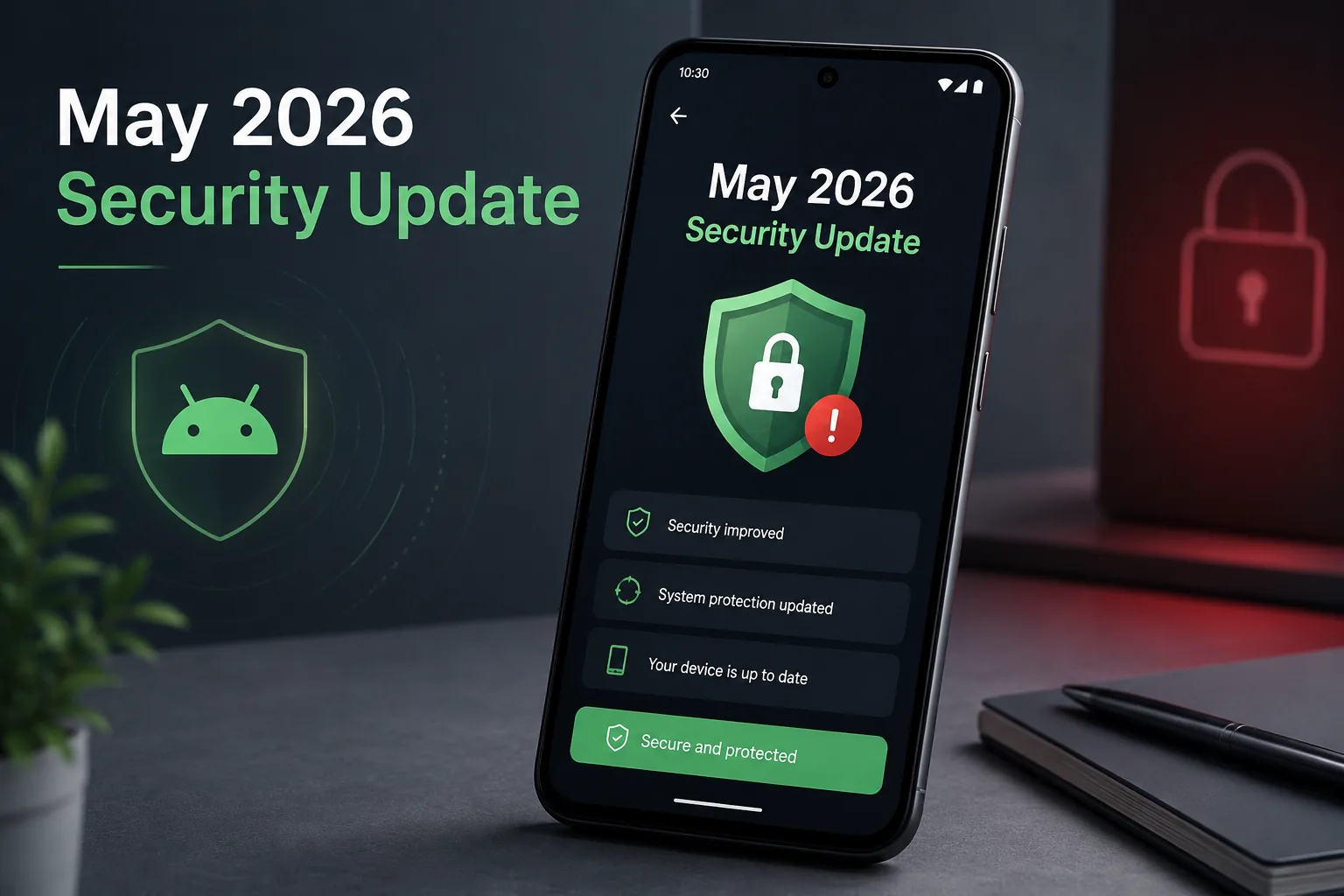
The May 2026 Android security bulletin is one of those updates Android users should not ignore. Google says this month’s bulletin includes a critical vulnerability in the System component that could allow remote code execution in certain conditions, and notably, user interaction is not needed for exploitation. That alone makes this update more important than a routine monthly patch.
If you have been putting off your latest Android update, this is the kind of release that should move it higher on your list.
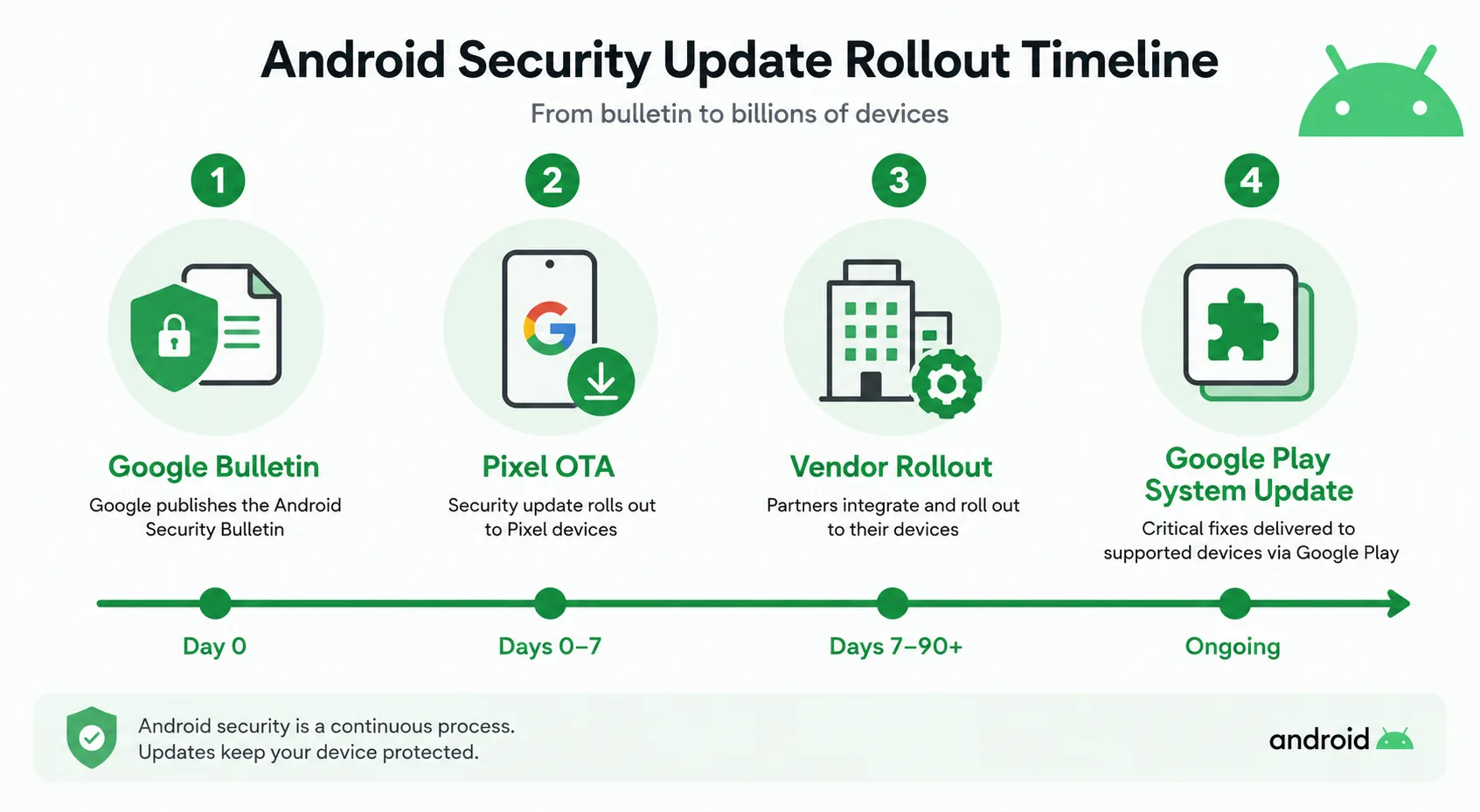
What the May 2026 Android security bulletin fixes
According to Google’s official bulletin published on May 4, 2026, the most serious issue is tracked as CVE-2026-0073. Google classifies it as critical and says it affects the System component.
In plain English, that means the vulnerability sits deep enough in Android that it matters across the wider ecosystem, not just inside one app. Google also notes that devices on Android 10 and later may receive relevant protection through both standard security updates and Google Play system updates, depending on the device and vendor rollout path.
Here is the key summary:
| Detail | What Google says |
|---|---|
| Bulletin name | Android Security Bulletin, May 2026 |
| Published date | May 4, 2026 |
| Most serious issue | CVE-2026-0073 |
| Severity | Critical |
| Risk type | Remote code execution |
| User interaction required | No |
| Patch level to look for | 2026-05-01 or later |
That last line matters most for everyday users. If your phone shows a security patch level of 2026-05-01 or later, Google says it includes the fixes tied to that patch level.
Why this May 2026 Android security bulletin matters more than a normal patch
Many Android security updates are important, but not all of them create urgent search interest. This one stands out for three reasons:
1. It includes a critical issue
Google did not bury the lead. The bulletin explicitly flags a critical vulnerability in the System component, which is always a serious sign.
2. No user interaction is needed
That does not mean every Android phone is instantly exposed in the same way, but it does mean this is not just a “don’t click suspicious links” story. Users do not always get a second chance with flaws in this category.
3. It affects a broad Android base
Google’s bulletin references updated AOSP versions including 14, 15, 16, and 16-qpr2, which tells us the fix is relevant across a wide part of the Android ecosystem.
Who should update first
The short answer is simple: almost everyone.
The users who should treat this as a priority include:
- Pixel owners who typically receive monthly updates first
- Samsung, Xiaomi, OnePlus, Motorola, and other Android users waiting on their vendor patch
- Anyone who sideloads apps outside Google Play more often than average
- Users on older phones that still receive security patches but tend to lag behind flagships
- People who rely on their phone for banking, work accounts, 2FA codes, or password management
If your phone is still supported, the safest move is to install the update as soon as it appears.
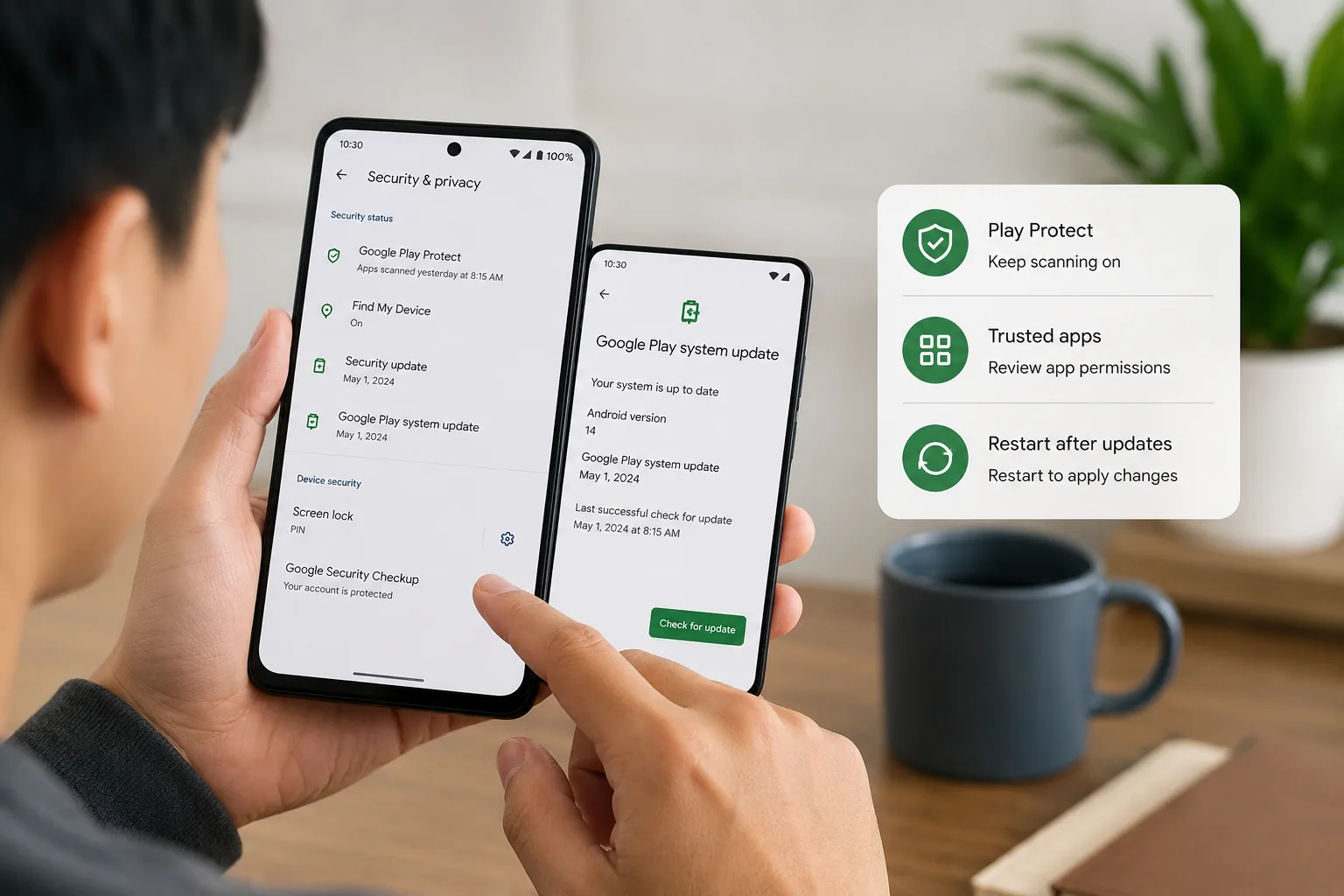
How to check if your phone already has the fix
This is the practical part most users need.
On most Android phones
- Open Settings
- Go to Security & privacy or About phone
- Look for Android security update or Security patch level
- Check whether the date is 2026-05-01 or newer
Also check Google Play system update
Because Google says some devices on Android 10 and later may receive coverage through Google Play system updates, it is worth checking that too:
- Open Settings
- Tap Security & privacy
- Open System & updates or Google Play system update
- Install any pending update
- Restart the phone if prompted
If your device shows an older date, that does not automatically mean it is unsafe forever. It often means your brand has not pushed the patch to your region yet. But it does mean you should keep checking rather than assuming you are covered.
What Pixel users should know
Google’s Pixel Update Bulletins page says Pixel OTA updates start the same day the monthly bulletin is released, but rollout to every eligible Google device can take about one and a half calendar weeks. So even if the bulletin is live, your phone may not get it instantly.
That is normal. If you own a Pixel and have not seen the update yet, manually checking for updates is still worth doing.
What Samsung, Xiaomi, and other Android users should know
Non-Pixel brands usually need extra time because each company has to package, test, and release updates for its own device list and regions. That creates three common situations:
- The patch is available quickly on current flagships
- Mid-range phones get it later in the month
- Some older supported devices may receive it through a slower regional rollout
So if you are using a Galaxy, Xiaomi, Redmi, POCO, OnePlus, Nothing, or Motorola phone, patience may still be part of the process. The important thing is to keep checking for both a full system update and a Google Play system update.
What you can do while waiting for the update
If your patch has not arrived yet, there are still a few sensible steps you can take:
- Keep Google Play Protect enabled
- Avoid installing APKs from untrusted sources
- Update your core apps from the Play Store
- Restart your phone after installing any security-related update
- Use the latest browser and messaging app versions
These steps are not substitutes for the patch, but they do reduce risk while you wait.
May 2026 Android security bulletin FAQ
What is the patch level I should look for?
You should look for 2026-05-01 or later in your Android security patch level.
What is CVE-2026-0073?
It is the critical vulnerability highlighted in Google’s May 2026 Android security bulletin. Google classifies it as a remote code execution issue in the System component.
Do I need a full phone update or just a Google Play system update?
It depends on your device. Google says some devices on Android 10 and later may receive relevant protections through Google Play system updates as well as standard Android security updates.
Are Pixel phones already getting the update?
Yes, Pixel rollout typically starts the same day the monthly Pixel bulletin is released, but full rollout can take around a week and a half.
If my phone is older, should I still check?
Yes. Even if your device is not first in line, any supported phone should be checked for both a system update and a Google Play system update.
Sources and official references
- Android Security Bulletin - May 2026
- Pixel Update Bulletin - May 2026
- Pixel Update Bulletins overview
Conclusion: the May 2026 Android security bulletin is worth checking today
The May 2026 Android security bulletin is not just another monthly maintenance update. A critical flaw, no required user interaction, and a fix tied to the 2026-05-01 patch level make this one especially worth checking right away.
If your phone has not updated yet, keep an eye on the rollout and check both your standard system update screen and the Google Play system update page. For many users, that small check is the fastest way to reduce risk today.