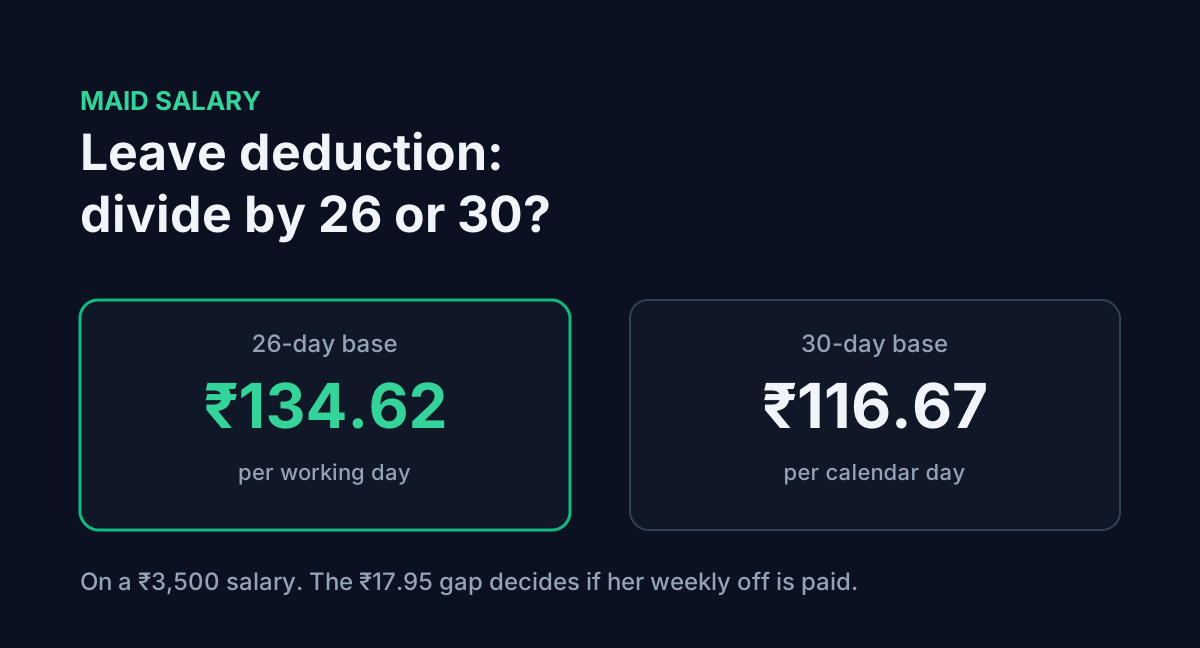
Your maid took three days off this month, and now there is a small argument waiting on payment day. One flatmate wants to divide the salary by 30, another by 26, and the third just wants to know what to send on UPI. The gap looks tiny. On a ₹3,500 salary it is ₹53.85 for those three days. But the method you pick quietly decides something bigger: whether her weekly off is paid or not.
This guide works through that choice with real numbers, then covers the two other things that go wrong when flatmates share a maid: splitting the bill fairly, and forgetting the Diwali bonus.
Table of Contents
- Why 26 and 30 give different answers
- The hidden pay cut in the 30-day method
- How much to deduct for 1 to 4 days off
- Splitting the salary between flatmates
- The bonus month nobody budgets for
- A simple rule your flat can agree on
- FAQ
- Conclusion
Why 26 and 30 give different answers
Both methods start with the same salary and produce a "per day" rate. They just divide by different numbers.
- 30-day base: ₹3,500 ÷ 30 = ₹116.67 a day. This treats every calendar day as a day of pay, including her weekly off.
- 26-day base: ₹3,500 ÷ 26 = ₹134.62 a day. This treats only the days she actually comes to work as paid working days. Her four weekly offs are already built into the salary.
The difference is ₹17.95 per day. That is the whole argument in one number, and it comes from a single question: is the weekly off something you pay for, or something you get for free?
Most households already answer this without thinking. Nobody docks pay for Sunday. If Sunday is paid rest, then the honest daily rate is the salary divided by the days she works, which is 26 in a month with one weekly off.
The hidden pay cut in the 30-day method
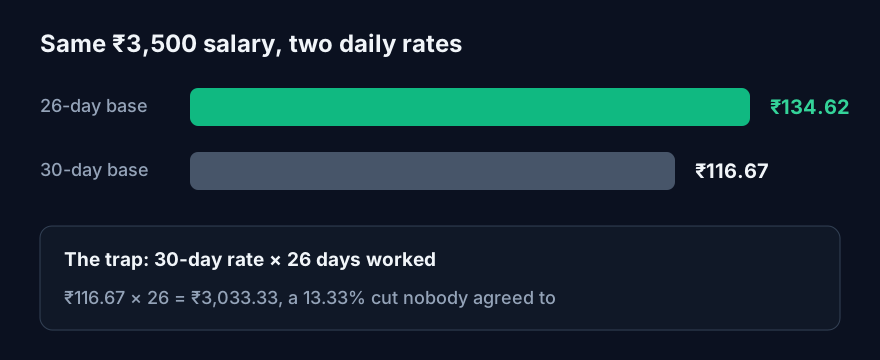
Here is where the 30-day method causes real trouble. Say someone in the flat decides to pay "per day worked" and uses the 30-day rate to do it.
She works 26 days. At ₹116.67 a day, that comes to ₹3,033.33, not ₹3,500.
That is a 13.33% pay cut, and nobody agreed to it. It happened because the 30-day rate assumed she gets paid for Sundays, and then Sundays were left out of the count. The method charged her for her own weekly off.
This is the mistake to watch for. Dividing by 30 is fine if you then pay for all 30 days. Dividing by 30 and paying for 26 is not.
How much to deduct for 1 to 4 days off
If your flat does deduct for leave, here is what each method takes off a ₹3,500 salary:
| Days off | 26-day base | 30-day base | Difference |
|---|---|---|---|
| 1 day | ₹134.62 | ₹116.67 | ₹17.95 |
| 2 days | ₹269.23 | ₹233.33 | ₹35.90 |
| 3 days | ₹403.85 | ₹350.00 | ₹53.85 |
| 4 days | ₹538.46 | ₹466.67 | ₹71.79 |
So after three days off, she takes home ₹3,096.15 on the 26-day base or ₹3,150.00 on the 30-day base.
The 26-day deduction is larger per day off, and that is correct. When she misses a working day, you lose a working day, and a working day is worth ₹134.62 of her salary. The 30-day number looks kinder, but it only stays fair if you never use it to skip paying for weekly offs.
The gap grows with salary. At ₹8,000 a month, three days off differ by ₹123.08 between the two methods.
Plenty of homes do not deduct short leave at all. Two or three days a month off, with no cut, is a normal arrangement and it builds a lot of goodwill. The point is to decide once, in advance, rather than on payment day.
Splitting the salary between flatmates
Once you know what she is owed this month, splitting it is simple division. The real decision is what you are dividing by.
- By person: four flatmates, four shares. ₹3,500 ÷ 4 = ₹875 each.
- By household: two families sharing one cleaner on a floor, two shares. ₹3,500 ÷ 2 = ₹1,750 each.
Extras get added before the split. If she did a deep clean for ₹500 this month and took two days off, the month works out like this on the 26-day base:
- Salary after 2 days off: ₹3,500 − ₹269.23 = ₹3,230.77
- Plus extras: ₹3,230.77 + ₹500 = ₹3,730.77
- Split four ways: ₹932.69 each
A couple counts as one share or two? That is a choice your flat makes, not a maths problem. Two people usually means more dishes and more laundry, so many flats count heads, not rooms. Whatever you pick, write it down in the flat group once.
If one flatmate is away for half the month, the cleanest fix is to agree they pay full share anyway. The maid still came every day and cleaned the same flat. Adjusting shares for travel turns a ₹875 split into a monthly negotiation.
You can do all of this in a few seconds with the Maid Salary Split Calculator: enter salary, extras, days missed and the number of shares, and it shows the payable amount, each person's share, and the 26-day and 30-day day rates side by side.
The bonus month nobody budgets for
Almost every household pays a festival bonus, usually about one month's salary at Diwali. That means a year with your maid is 13 salaries, not 12.
Here is what that does to each person's yearly cost on a ₹3,500 salary:
| Shares | 12 months | 13 months (with bonus) | Extra per person |
|---|---|---|---|
| 2 | ₹21,000 | ₹22,750 | ₹1,750 |
| 3 | ₹14,000 | ₹15,166.67 | ₹1,166.67 |
| 4 | ₹10,500 | ₹11,375 | ₹875 |
For four flatmates, the bonus is ₹875 each that usually lands in October with no warning. Spread across the year, it is only ₹72.92 a month per person. Some flats collect that small amount every month into a shared pot, so Diwali does not become one more split to argue about.
A simple rule your flat can agree on
If you want one line to paste in the flat WhatsApp group, this works:
Salary ₹___ a month, one weekly off paid. Leave beyond ___ days a month is deducted at salary ÷ 26 per day. Extras are added before splitting. Split ___ ways. One month's bonus at Diwali, collected at ₹___ per person per month.
Fill the blanks once. After that, every payment day is just arithmetic.
FAQ
Should I divide maid salary by 26 or 30 for leave deduction? Divide by 26 if your maid has one weekly off. Her weekly off is paid rest, so the true daily rate is the salary divided by the days she works. Dividing by 30 is only fair if you also pay her for all 30 days.
How much should I cut for one day off on a ₹3,500 salary? ₹134.62 on the 26-day base, or ₹116.67 on the 30-day base. Many households do not cut for one or two days at all.
Why is dividing by 30 and paying for 26 days wrong? Because it charges her for her own weekly offs. ₹116.67 × 26 working days is ₹3,033.33, which is 13.33% less than the ₹3,500 you agreed.
How do I split maid salary among four flatmates? Add any extras, subtract any agreed leave deduction, then divide by four. A full ₹3,500 month is ₹875 each.
Is the Diwali bonus part of the maid's yearly cost? Yes. One bonus month makes the year 13 salaries. For four people on ₹3,500, that is ₹11,375 each instead of ₹10,500.
Conclusion
The 26-versus-30 question is really about whether the weekly off is paid. If it is, the daily rate is salary ÷ 26, and the one thing to avoid is using the 30-day rate to pay only for days worked. Decide your leave rule and your split once, add the bonus month to the yearly budget, and payment day stops being a debate. The Maid Salary Split Calculator handles the arithmetic, and if you also split rent and bills, the rent, maintenance and utility calculator does the same for the rest of the flat's costs.
Sources
- All figures in this guide are calculated from a ₹3,500 monthly salary (and ₹8,000 for the higher-salary example), using the same formulas as the ToolMintX Maid Salary Split Calculator: day rate = salary ÷ 26 or ÷ 30, deduction = day rate × days missed, yearly cost = salary × 13 ÷ shares.