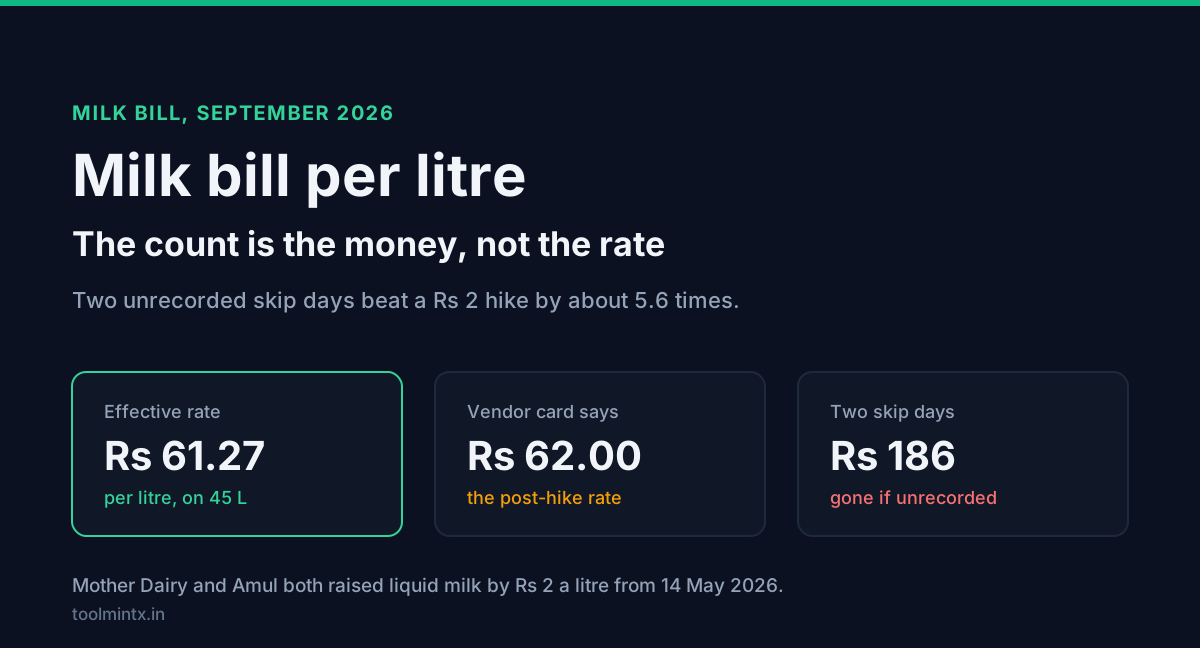
Every month-end conversation with the doodhwala follows the same script. He says a number, you say a smaller number, and you both argue about the rate per litre. The rate is almost never where the gap is. In a normal month it accounts for tens of rupees and the day count accounts for hundreds, so the argument you're having is usually the wrong one.
Below is the arithmetic that settles it, the September 2026 Delhi rates it runs on, and the three places a gap hides.
Table of contents
- The formula
- A worked month
- Comparing effective rates
- Where the gap comes from
- Milk rates in Delhi NCR
- Billing a mid-month hike
- Pouch size and price
- What arithmetic can't check
- FAQ
- Sources
The formula
Total litres, then total rupees, then divide.
Litres = (daily quantity × days delivered) + extra litres, where days delivered is the cycle length minus the days you skipped. Rupees = the litres before the hike at the old rate, plus the litres after it at the new rate. Divide rupees by litres and you get your effective rate per litre.
That last figure is the one to quote. It won't match the rate printed on the vendor's card, and it shouldn't, because part of your month ran at a different price.
Keep extras separate from the routine quantity. Three litres taken over one weekend is not your daily figure rising by 0.1 L, and averaging it in makes every later month wrong.
A worked month
Take the month most households actually have. 1.5 litres a day on a 30-day cycle. You travelled for two days. Someone asked for three extra litres before a festival. The rate went from ₹60 to ₹62 with 17 days left in the cycle.
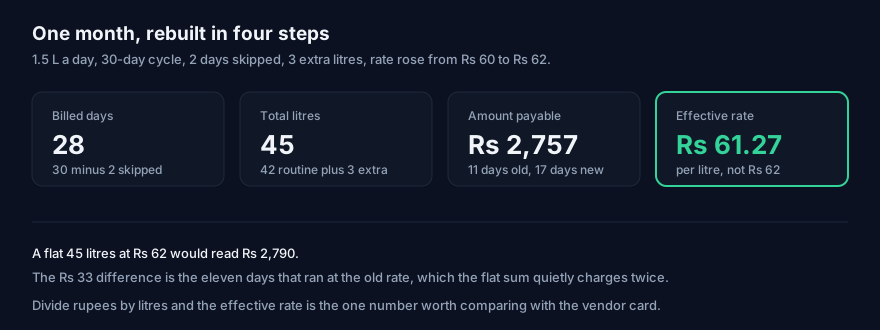
30 days minus 2 skipped is 28 delivered days. 1.5 × 28 is 42 routine litres, plus 3 extra is 45 litres. Split the routine litres 11 days at ₹60 and 17 days at ₹62, charge the extras at the current rate, and the bill is ₹2,757.
A flat 45 litres at ₹62 reads ₹2,790. The ₹33 difference is those eleven days at the old rate. It's small, but you can name it.
Comparing effective rates
₹2,757 over 45 litres is ₹61.27 a litre. If the vendor's total divided by your litre count comes out higher, you have a specific question to ask instead of a vague feeling that the bill looks high.
The Monthly Milk Bill Calculator runs this in the browser. Enter the daily quantity, cycle length, skipped days, extra litres and both rates, and it reports total litres, amount payable, the effective rate, and what the skipped days saved you. Nothing is sent anywhere, which counts for something when the input is your household's routine.
Where the gap comes from
There are three causes, in the order they usually turn out to be the culprit:
- Skipped days that never made it onto the card, usually a trip you mentioned verbally.
- Extra litres you asked for and forgot, common around a festival.
- A rate change applied to the whole month instead of from its effective date.
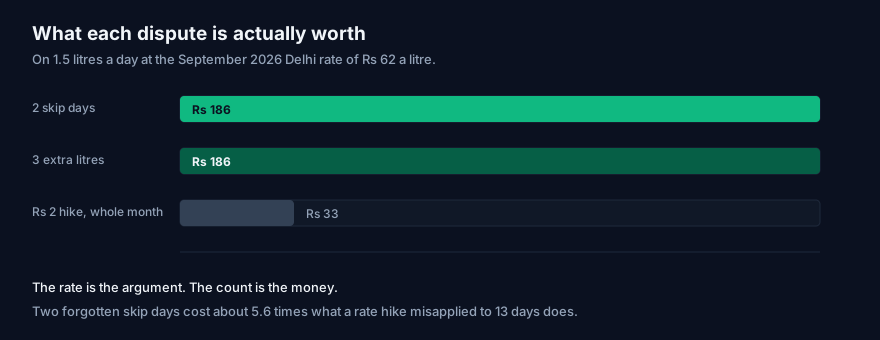
At ₹62 a litre on 1.5 litres a day, two unrecorded skip days are ₹186. Three forgotten extra litres are also ₹186. A ₹2 hike wrongly applied to 13 pre-hike days is ₹33. The count is worth roughly 5.6 times the rate, and the count is the thing nobody writes down.
Two habits fix most of it. Send the skip as a message instead of saying it at the gate, so there's a timestamp. And note the date when you ask for extras. The extras are almost always yours to concede, and conceding them cheerfully makes the skip days more credible.
Milk rates in Delhi NCR
Both big brands raised liquid milk by ₹2 a litre from 14 May 2026, Amul's first increase since May 2025. Mother Dairy's Delhi-NCR rates after that revision:
| Variant | Rate per litre | Was |
|---|---|---|
| Full cream | ₹72 | ₹70 |
| Toned | ₹60 | ₹58 |
| Double toned | ₹54 | ₹52 |
| Cow milk | ₹62 | ₹60 |
| Token (bulk vended) | ₹58 | ₹56 |
Amul moved with it: Gold to ₹70 a litre from ₹68, Taaza to ₹57 from ₹55. The co-operative put the rise at 2.5% to 3.5% and attributed it to roughly 6% higher procurement costs paid to farmers over the year.
If you buy loose milk from a dairy, none of these numbers are yours. They still work as a sanity check, since loose milk usually tracks a few rupees under the toned pack rate.
Billing a mid-month hike
Strictly, the old rate applies until the effective date and the new rate after it. A vendor who applies the new rate to all 30 days is overcharging you for the days before the hike.
Ask which date the new rate started. It's a fixed, checkable answer, and asking isn't an accusation. On 1.5 litres a day a ₹2 rise across 13 pre-hike days is about ₹39, so this is record-keeping more than money. It comes up every year, so settle it once.
Also confirm whether the rate you were quoted is the printed pack rate or includes doorstep delivery. A premium of a rupee or two a litre for delivery is fair. You just want it named, not folded into a rate that then fails to match the pack.
Pouch size and price
At the May 2026 Amul rates, Taaza was ₹29 for 500 ml against ₹57 for a litre. Two pouches cost ₹58, a ₹1 premium for the same milk. On 45 litres a month that is ₹45, or ₹540 a year for buying the smaller pack out of habit.
Amul Gold had no gap at all: ₹35 and ₹70. The premium exists on some variants and not others, so check yours once.
What arithmetic can't check
Quantity. If the half-litre measure at the dairy runs a little short, every calculation on this page is right and the bill is still wrong. No calculator detects that. If you buy loose regularly, measure one delivery yourself now and then.
Keep the amounts in proportion too. On 1.5 litres a day a ₹2 rate hike is ₹90 a month and ₹1,080 a year, about 3.2% of the bill. It's worth knowing and not worth changing vendors over. The same household's electricity bill on state slab rates will move by more than that in a single hot month.
FAQ
How do you calculate a milk bill per litre?
Litres = (daily quantity × delivered days) + extras. Rupees = litres before the hike at the old rate + litres after at the new rate. Divide rupees by litres. On 1.5 L a day over 30 days with 2 skipped and 3 extra litres, split ₹60 and ₹62, that is 45 L, ₹2,757 and an effective ₹61.27 a litre.
The vendor's total is higher than mine. What do I check first?
Skipped days, then extra litres, then the hike date. Unrecorded skips and forgotten extras are each worth around ₹186 in the example above, while a misapplied rate hike is ₹33.
What is the milk rate in Delhi in September 2026?
Mother Dairy full cream is ₹72 a litre, toned ₹60, double toned ₹54, cow milk ₹62 and token milk ₹58, all after the ₹2 rise on 14 May 2026. Amul Gold is ₹70 and Taaza ₹57.
Does a 1-litre pack cost less than two 500 ml pouches?
Sometimes. Amul Taaza was ₹29 and ₹57, so pouches carried a ₹1 per litre premium. Amul Gold at ₹35 and ₹70 had none. Check your variant.
Sources
- Mother Dairy raises milk prices by ₹2 a litre, NDTV Profit: full cream ₹72, toned ₹60, double toned ₹54, cow ₹62, read 10 September 2026
- Mother Dairy hikes milk prices from May 14, Times of India: Delhi-NCR revised rates and daily volume, read 10 September 2026
- Amul raises milk prices by ₹2 per litre, first hike since 2025, NDTV: Taaza ₹29 for 500 ml and ₹57 a litre, Gold ₹35 for 500 ml, read 10 September 2026
- Amul raises prices across key variants, Moneycontrol: Gold ₹70 from ₹68, Taaza ₹57 from ₹55, read 10 September 2026