Short Intro
Anthropic’s Claude Opus 4.7 arrived on April 16, 2026 with a very specific promise: make hard, multi-step work more reliable, not just a little smarter on benchmarks. That matters because many teams are no longer using AI only for one-off answers. They are using it for code review, debugging, data work, document generation, and longer agent-style runs that touch several tools in sequence.
The real question is not whether Opus 4.7 is better than Opus 4.6 in the abstract. The practical question is whether it is better enough to justify changing prompts, budgets, and production defaults. This guide focuses on that decision.
Table of Contents
- What Claude Opus 4.7 actually changes
- Why this launch matters for coding and agent workflows
- Pricing, availability, and rollout details
- When you should upgrade now
- When you should wait and test first
- How to evaluate Claude Opus 4.7 step by step
- Practical examples
- FAQ
- Conclusion
What Claude Opus 4.7 Actually Changes
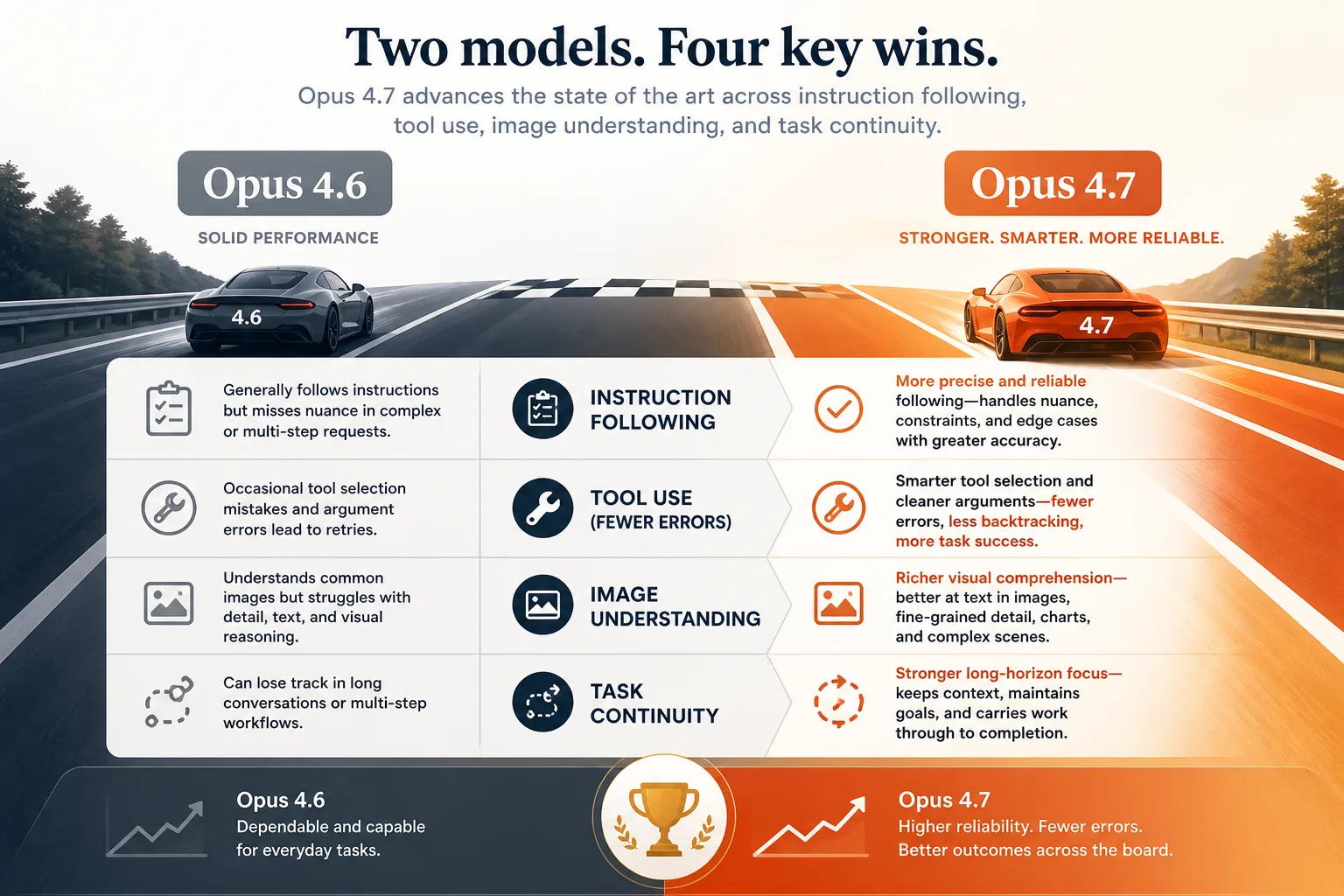
Claude Opus 4.7 is now generally available across Claude products, the Claude API, Amazon Bedrock, Google Cloud Vertex AI, and Microsoft Foundry. Anthropic says the model is stronger than Opus 4.6 in advanced software engineering, vision, document reasoning, long-context work, and multi-step task execution. The company also kept pricing the same as Opus 4.6 at $5 per million input tokens and $25 per million output tokens.
That alone would already make this an easy “at least test it” release. But the more important detail is the kind of improvement Anthropic is claiming. This is not being positioned as a small quality bump. It is being framed as a reliability and autonomy upgrade for difficult work that used to require more supervision.
Anthropic’s own notes emphasize a few concrete shifts:
- stronger instruction following
- fewer tool errors in multi-step workflows
- better high-resolution image understanding
- more useful file-system memory in long work sessions
- better reasoning continuity on long-running tasks
- new
xhigheffort control betweenhighandmax
This is the kind of release that changes workflow design, not just leaderboard screenshots.
Why This Launch Matters for Coding and Agent Workflows
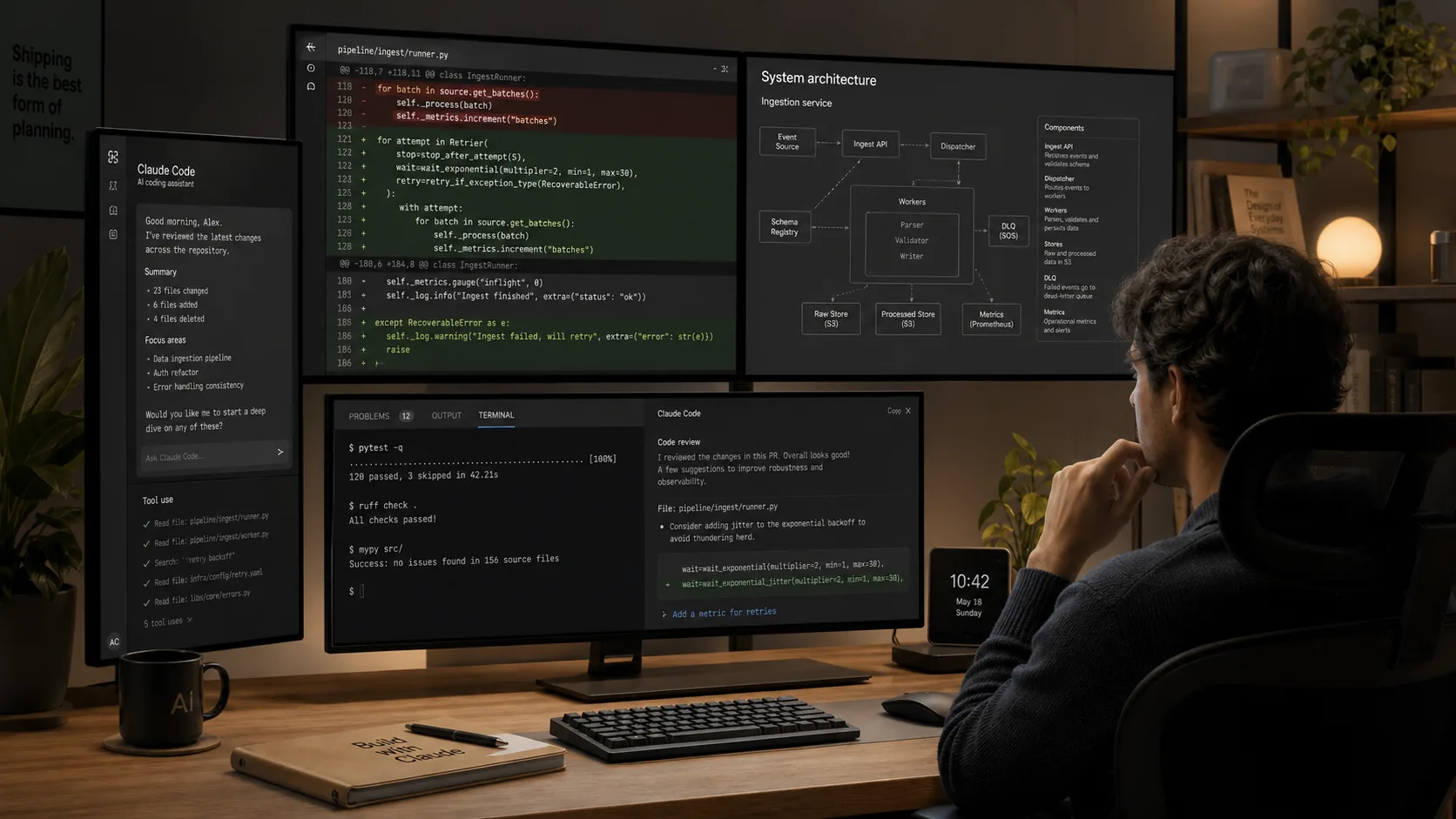
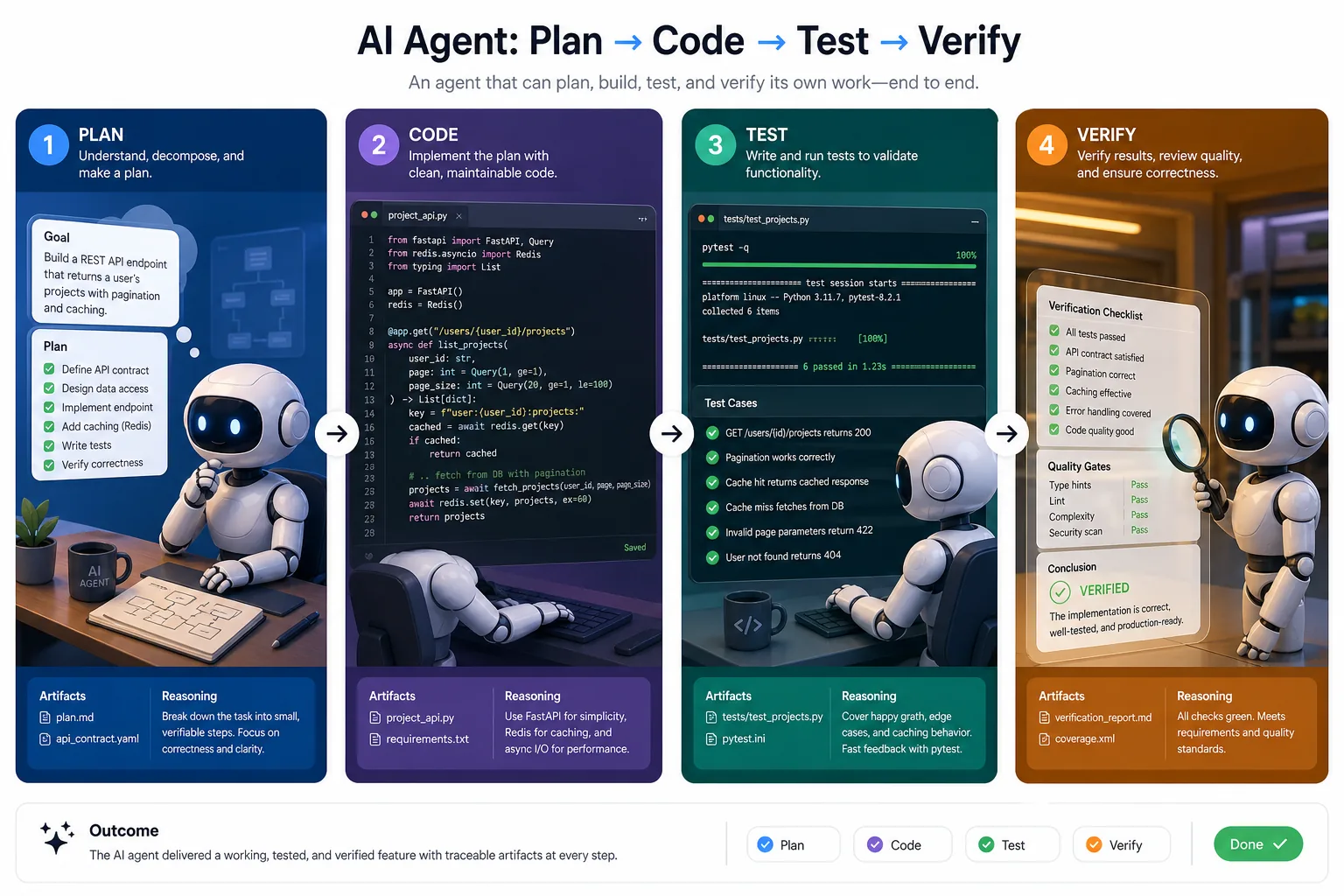
Most development teams hit the same wall with frontier AI systems. The model may look great in a demo, but real work breaks when context gets messy, tools fail mid-run, instructions are nested, or the agent has to verify its own output before handing work back.
That is exactly the gap Opus 4.7 is trying to close.
According to Anthropic, Opus 4.7 improves on Opus 4.6 for complex, long-running coding work and handles harder tasks with more rigor and consistency. The launch post also says users should expect stronger literal instruction following. That sounds helpful, but it has an operational consequence: prompts and harnesses that relied on the older model’s looser behavior may need retuning.
This is why the upgrade question is not simply “Is Opus 4.7 better?” It is “Will Opus 4.7 behave better on the workflows that cost us the most time?”
For many teams, those are workflows like:
- repo-wide debugging where the model must inspect several files before editing
- code review where precision matters more than verbosity
- tool-using agents that must keep going after minor errors
- document or dashboard generation from mixed data sources
- multimodal tasks involving screenshots, diagrams, or dense interfaces
If your AI usage still lives mostly in short chat prompts, Opus 4.7 may feel like an incremental improvement. If your workflows already rely on agents, long context, or autonomous coding passes, this release is much more important.
Pricing, Availability, and Rollout Details
Here are the practical rollout details that matter as of May 4, 2026:
- Launch date: April 16, 2026
- Availability: Claude products, Claude API, Amazon Bedrock, Google Cloud Vertex AI, Microsoft Foundry
- API model name:
claude-opus-4-7 - Pricing: $5 per million input tokens and $25 per million output tokens
- New effort option:
xhigh
Anthropic also introduced task budgets in public beta on the Claude Platform and added a new /ultrareview command in Claude Code for dedicated review sessions. Those surrounding platform changes matter because they make the model easier to control in production, especially when balancing quality against latency and token spend.
One caution from Anthropic deserves extra attention: the updated tokenizer can map the same input to roughly 1.0 to 1.35 times more tokens depending on content type. So even if the headline price is unchanged, your real bill may still move. Teams should measure actual traffic before assuming flat cost.
When You Should Upgrade Now
You should seriously consider upgrading soon if your team depends on AI for high-friction engineering work rather than casual experimentation.
Opus 4.7 looks especially relevant if you need:
- stronger code review on large pull requests
- better persistence across long terminal or repo tasks
- fewer failures in multi-tool agent workflows
- better screenshot or diagram reading
- improved honesty when context is incomplete
This is also a good fit for teams building internal developer tooling, research agents, or enterprise document workflows. Anthropic’s launch material repeatedly points toward that use case pattern. Even many of the customer examples are less about “chatbot quality” and more about execution quality.
For ToolMintX readers, that makes Opus 4.7 a strong candidate for workflows that combine prompt templates, code generation, document drafting, review automation, and structured comparison across models. If you already maintain a model-evaluation sheet or prompt library on ToolMintX, this is the kind of release that deserves a fresh benchmark row rather than a blind swap.
When You Should Wait and Test First
You should not switch production defaults blindly if any of these are true:
- your prompts depend on vague or forgiving instruction interpretation
- your budget is tightly tied to historical token assumptions
- your internal evals reward speed more than completion quality
- you use mostly short, low-stakes prompts where Opus 4.6 is already enough
Anthropic explicitly says Opus 4.7 follows instructions more literally. In practice, that can surface hidden flaws in prompt design. A messy prompt that “worked fine” before may now produce results that are technically obedient but operationally awkward.
That is not a model problem. It is a prompt and harness maintenance problem. But it still affects rollout speed.
How to Evaluate Claude Opus 4.7 Step by Step
1. Pick the right test set
Do not test only happy-path prompts. Use real tasks that previously caused waste, rework, or supervision overhead.
Good candidates include:
- failed or slow code reviews
- repo bug hunts with multiple false starts
- screenshot-heavy troubleshooting
- long multi-turn planning tasks
- document generation with strict source fidelity
2. Compare effort levels, not just models
Anthropic recommends starting with high or xhigh for coding and agentic use cases. That means you should compare:
- Opus 4.6 at your current default
- Opus 4.7 at
high - Opus 4.7 at
xhigh
In some teams, the best upgrade will not be “replace everything.” It may be “use Opus 4.7 only for the top 20% hardest tasks.”
3. Measure completion quality, not just output length
Count:
- did it finish the job
- did it verify its own work
- did it recover from tool trouble
- did it ask useful follow-up questions
- did it avoid fake confidence
These are the signals that matter in agent workflows.
4. Check token behavior on real traffic
Because tokenization changed, measure cost on actual prompt logs before rollout. Pricing parity is useful, but real spend can still shift.
5. Retune prompts that relied on vagueness
If the model suddenly feels “too literal,” that often means your instructions were underspecified. Tighten them. Add success criteria, output boundaries, and stop conditions.
6. Keep a fallback path
For the first production phase, keep Opus 4.6 or a cheaper model available as a fallback. That gives you operational safety while you learn where Opus 4.7 creates its best return.
Practical Examples
Example 1: AI code review
If your current reviewer catches style issues but misses deeper logic problems, Opus 4.7 may be worth testing first on:
- authentication changes
- concurrency-related pull requests
- infra automation updates
- migrations with rollback risk
The goal is not more comments. The goal is better comments.
Example 2: Debugging from logs and traces
Opus 4.7 could be a better fit where the model needs to read logs, infer missing context, inspect several files, and propose a fix path. This is the kind of task where long-run consistency matters more than flashy first-pass output.
Example 3: Multimodal engineering support
If your team works from screenshots, architecture diagrams, or design references, Anthropic’s improved high-resolution image support is one of the most practical parts of the release. Support teams, QA teams, and product engineers should test this directly instead of treating it as a minor add-on.
FAQ
Is Claude Opus 4.7 more expensive than Opus 4.6?
The listed price is unchanged at $5 per million input tokens and $25 per million output tokens. However, real usage may still change because Opus 4.7 uses an updated tokenizer and can spend more tokens on deeper reasoning.
Is this mainly a coding upgrade?
Coding is a major part of the story, but not the only one. Anthropic also highlights gains in vision, document reasoning, long-context work, and professional knowledge tasks.
Should every team switch immediately?
No. Teams should test with real workloads first, especially if they have tightly tuned prompts, cost controls, or latency requirements.
What is the most important practical change?
For many teams, it will be better follow-through on hard multi-step tasks. That usually matters more than a small benchmark gain.
What should developers retest first?
Retest prompts where earlier models skipped instructions, improvised too much, or failed after minor tool issues.
Conclusion
Claude Opus 4.7 looks like a meaningful release because it targets the exact pain points that make AI useful or frustrating in real engineering environments: instruction fidelity, long-task consistency, tool reliability, and better self-checking.
That does not make it an automatic drop-in replacement for every stack. But it does make it one of the clearest “run fresh evals this week” launches in recent months. If your team uses AI mostly for serious coding, review, multimodal troubleshooting, or agent-style execution, the smartest move is to test Opus 4.7 on your hardest workflows first and decide from evidence, not hype.
Sources: Anthropic announcement on Claude Opus 4.7 (published April 16, 2026) and Anthropic product documentation on model availability, effort controls, and migration guidance.