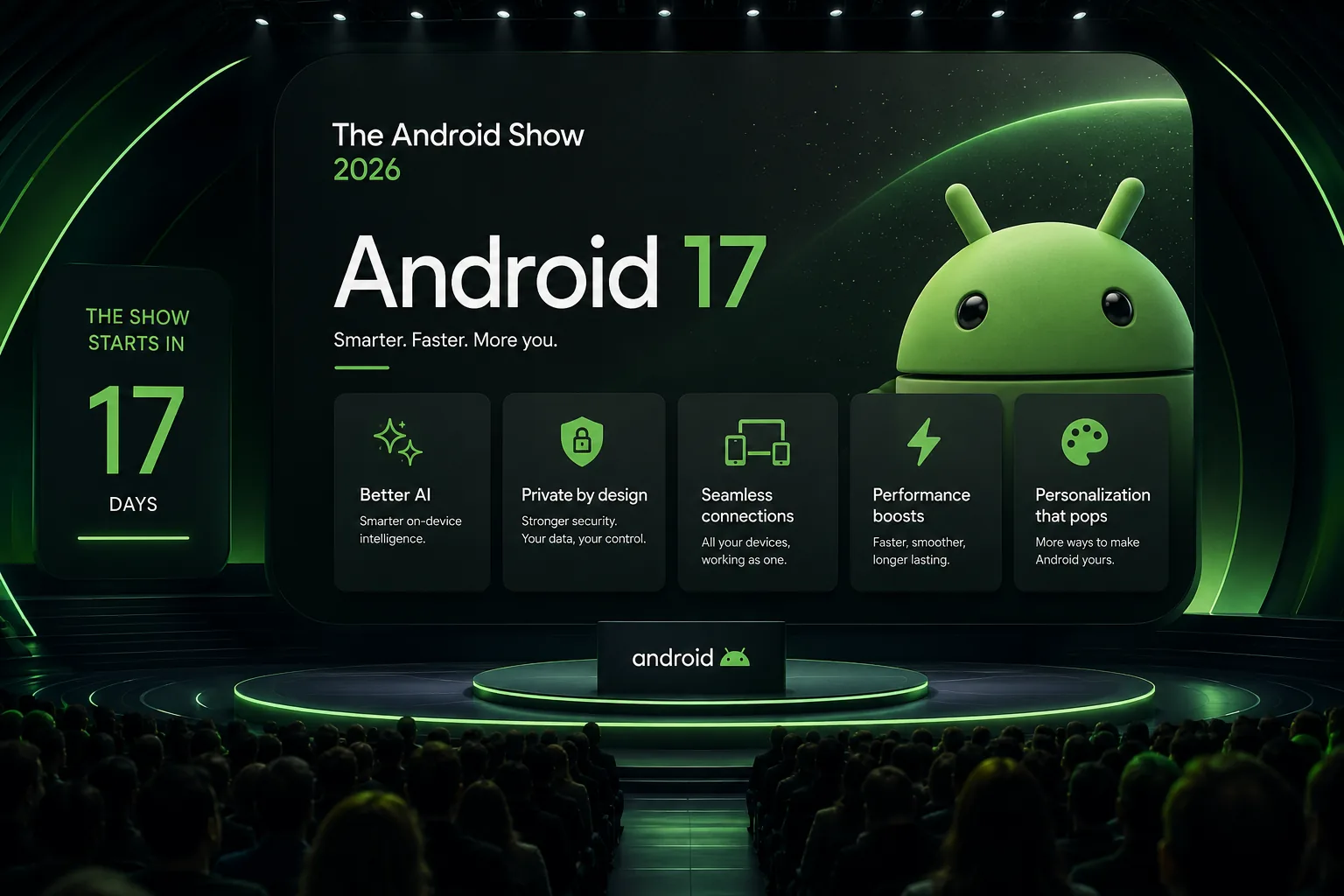
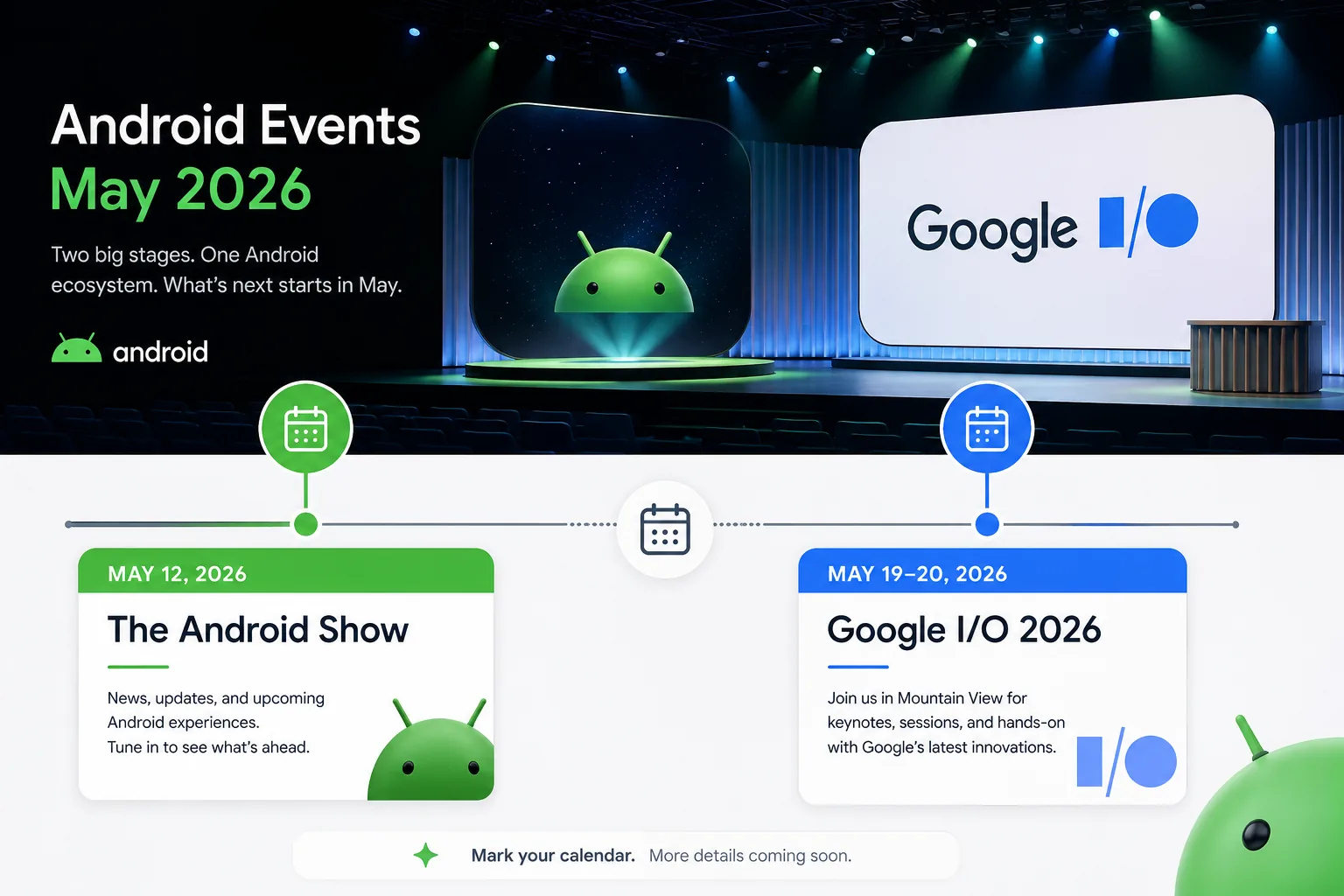
The Android Show 2026 is now officially on the calendar for May 12 at 10 a.m. PT, and that timing alone makes it one of the clearest trend signals in Android right now. Google has positioned the event as a lead-in to Google I/O 2026, which follows on May 19 and 20, and the Android developer site is already teasing “one of the biggest years for Android yet.”
Rather than guess at rumors, the useful way to read the show is through the features Google has already documented in the Android 17 beta cycle. Android 17 has reached platform stability, developers need final compatibility guidance rather than previews, and the show sits a week ahead of I/O — so it's the moment Android 17 shifts from "developer beta" to launch narrative. Here are the seven documented Android 17 changes most likely to headline it.
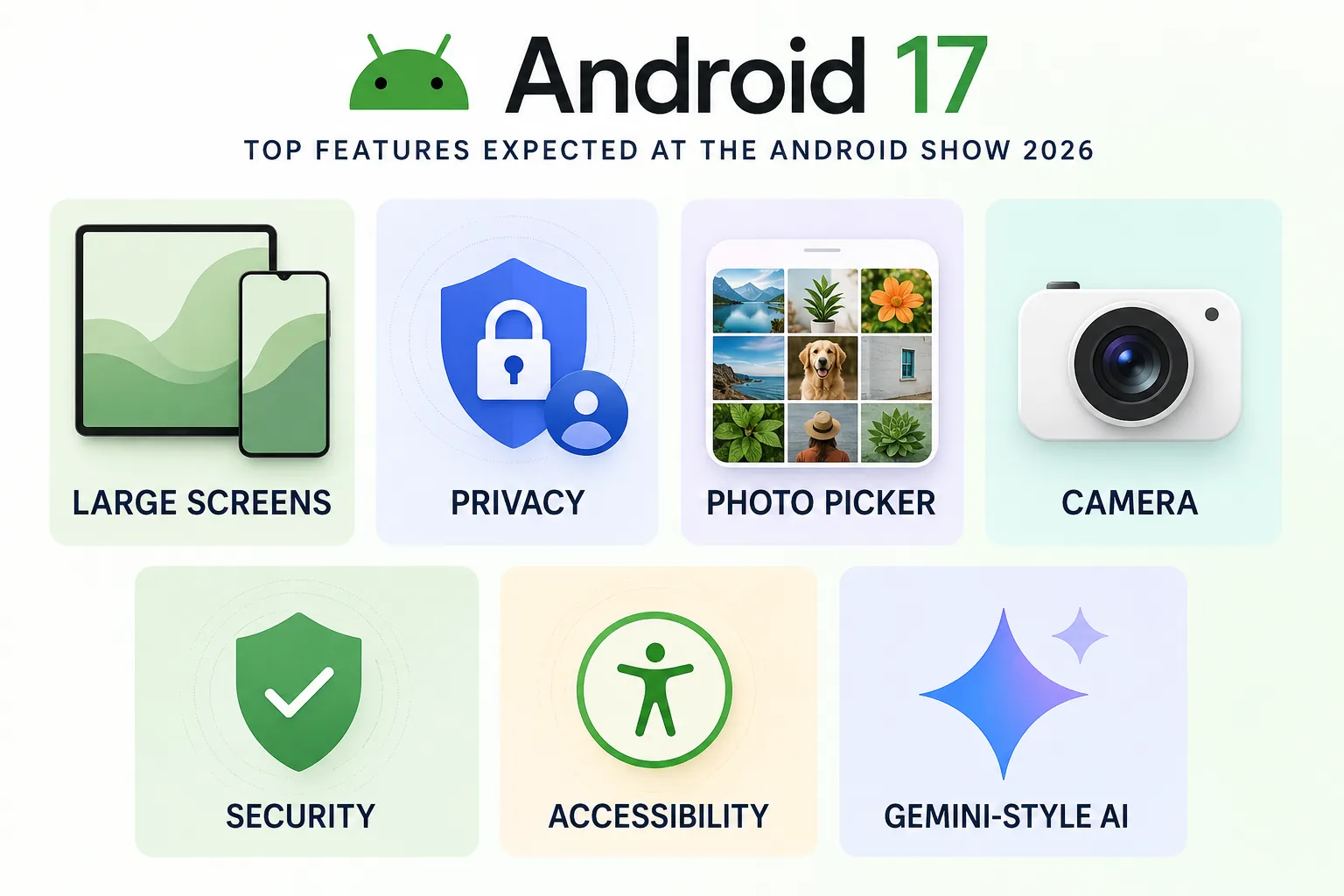
The 7 documented Android 17 updates to watch
| Feature or theme | Why it could be highlighted | Why users and developers should care |
|---|---|---|
| Large-screen resizability rules | It is one of Android 17’s clearest platform-level behavior changes | Better app behavior on foldables and tablets |
| Local network protections | Privacy changes are headline-friendly and easy to message | Apps will need new access patterns and users get tighter controls |
| Photo Picker customization | It is practical, visual, and easier to demo | Better media experiences without broad storage access |
| Camera extension upgrades | Hardware partners can turn this into launch-worthy features | Better mobile photography and AI camera modes |
| Certificate transparency by default | Strong security message for I/O season | Better trust and safer app/network behavior |
| Bluetooth LE hearing aid improvements | Accessibility stories often get meaningful stage time | More useful audio control for people who rely on assistive devices |
| Android plus Gemini integration hints | Google will likely connect Android and AI more tightly | Important for on-device assistance, search, and cross-app help |
1. Large-screen app behavior (resizability rules)
Once apps target Android 17, developers can no longer opt out of maintaining orientation, resizability, and aspect-ratio support on large-screen devices. It sounds technical, but it's one of the most user-visible changes in the release: foldables and tablets still suffer when phone-first apps refuse to adapt, and this rule forces better behavior across form factors.
2. Local network protections
Android 17 blocks local network access by default for apps targeting the new version unless developers request a new permission. It's a privacy change that pushes apps toward more restrained access patterns and gives users tighter control over what an app can reach on their network.
3. Photo Picker customization
Android 17 gives developers more control over the Photo Picker's appearance, including portrait-oriented presentation. It solves a real design problem — secure photo selection often feels bolted-on and disconnected from the rest of an app — and it lets apps offer better media selection without requesting broad storage access.
4. Camera and media upgrades
The public beta documents support for the RAW14 image format and vendor-defined camera extensions. These open the door to more device-specific photography features, which is why they matter to phone makers as much as to app developers — Google ships the platform capability, partners build product features on top of it.
5. Certificate transparency by default
Android 17 enables certificate transparency by default. It won't dominate social clips, but it's a meaningful long-term trust and network-safety change, and it fits Google's recent emphasis on app safety and verification. Worth watching the security slides, not just the consumer demos.
6. Bluetooth LE Audio hearing-aid improvements
Android 17 includes updates for Bluetooth LE Audio hearing aids and more granular audio routing for system sounds. Accessibility features rarely trend on day one, but they matter — they're evidence Android is improving for more kinds of users, not only flagship buyers.
7. Android + Gemini integration
Google will likely save the biggest AI reveals for I/O itself, but it would be surprising if the Android show ignored Gemini — Android is one of Google's largest surfaces for AI people touch daily. The realistic expectation isn't a surprise product; it's a clearer picture of where Gemini fits across phones, large screens, and in-app assistance, tied to concrete features rather than AI branding.
What to watch for on May 12
If you want the shortest useful checklist before the show starts, focus on these questions:
- Does Google frame Android 17 mainly around user-facing features or developer changes?
- Which Android 17 beta features get stage time instead of staying in documentation?
- How closely does Google connect Android updates with Gemini and the wider I/O story?
- Do large screens, privacy, and camera features get concrete demos?
Those answers will tell us a lot about where Android is headed in the second half of 2026.
Conclusion
With Android 17 at platform stability and the show set for May 12, 2026, the likely highlights aren't guesswork — they're the features Google has already documented: large-screen resizability rules, local network protections, Photo Picker customization, RAW14 and camera-extension upgrades, certificate transparency, LE Audio hearing-aid support, and tighter Android-plus-Gemini positioning. If you're tracking Android this month, that's the list to watch against whatever Google actually puts on stage.
FAQ
When is The Android Show 2026?
Google’s Android developer site lists The Android Show for May 12, 2026 at 10 a.m. PT.
Is The Android Show separate from Google I/O 2026?
Yes. The Android Show happens before Google I/O 2026, which is scheduled for May 19 and May 20.
What is the biggest Android 17 feature to watch?
Large-screen behavior changes are one of the most important public Android 17 updates because they directly affect app quality on tablets and foldables.
Will Google announce Gemini features at The Android Show 2026?
Google has not fully detailed the presentation lineup yet, but Android and Gemini are closely connected in Google’s current product strategy, so some overlap is likely.