Short Intro
TSMC is getting fresh search attention again, and the reason is bigger than one earnings headline.
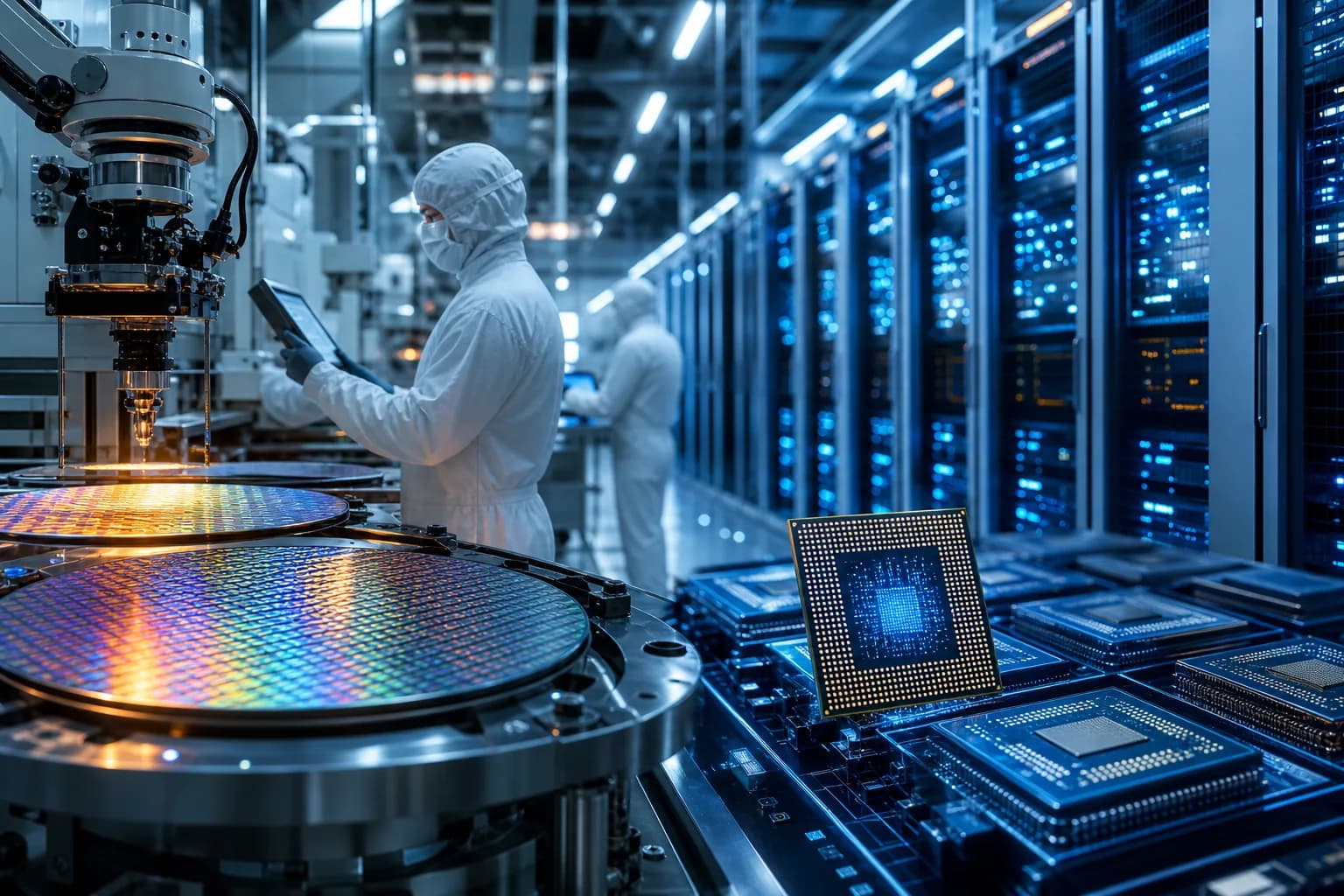
Its first-quarter 2026 results, released on April 16, 2026, gave the market a clearer picture of what the AI hardware boom actually looks like at the manufacturing level. This is not only a story about revenue going up. It is a story about extreme demand for leading-edge silicon, a more durable appetite for AI accelerators, tighter advanced packaging capacity, and a supply chain that still matters just as much as model quality.
For readers trying to understand the next phase of AI infrastructure, TSMC is one of the best places to look. Many of the companies dominating the AI conversation still depend on TSMC's process nodes and packaging stack. So when TSMC says demand remains extremely robust, that tells us something more grounded than social media hype.
This article explains why TSMC is trending, what its latest numbers actually say, and what developers, GPU buyers, and infrastructure planners should do with that information. For ToolMintX readers, this is also where practical capacity planning tools such as the AI VRAM Calculator become useful. Hype is easy. Matching model ambition to realistic hardware availability is harder.
Table of Contents
- Why TSMC is trending right now
- What TSMC reported in Q1 2026
- Why AI demand matters more than the headline revenue
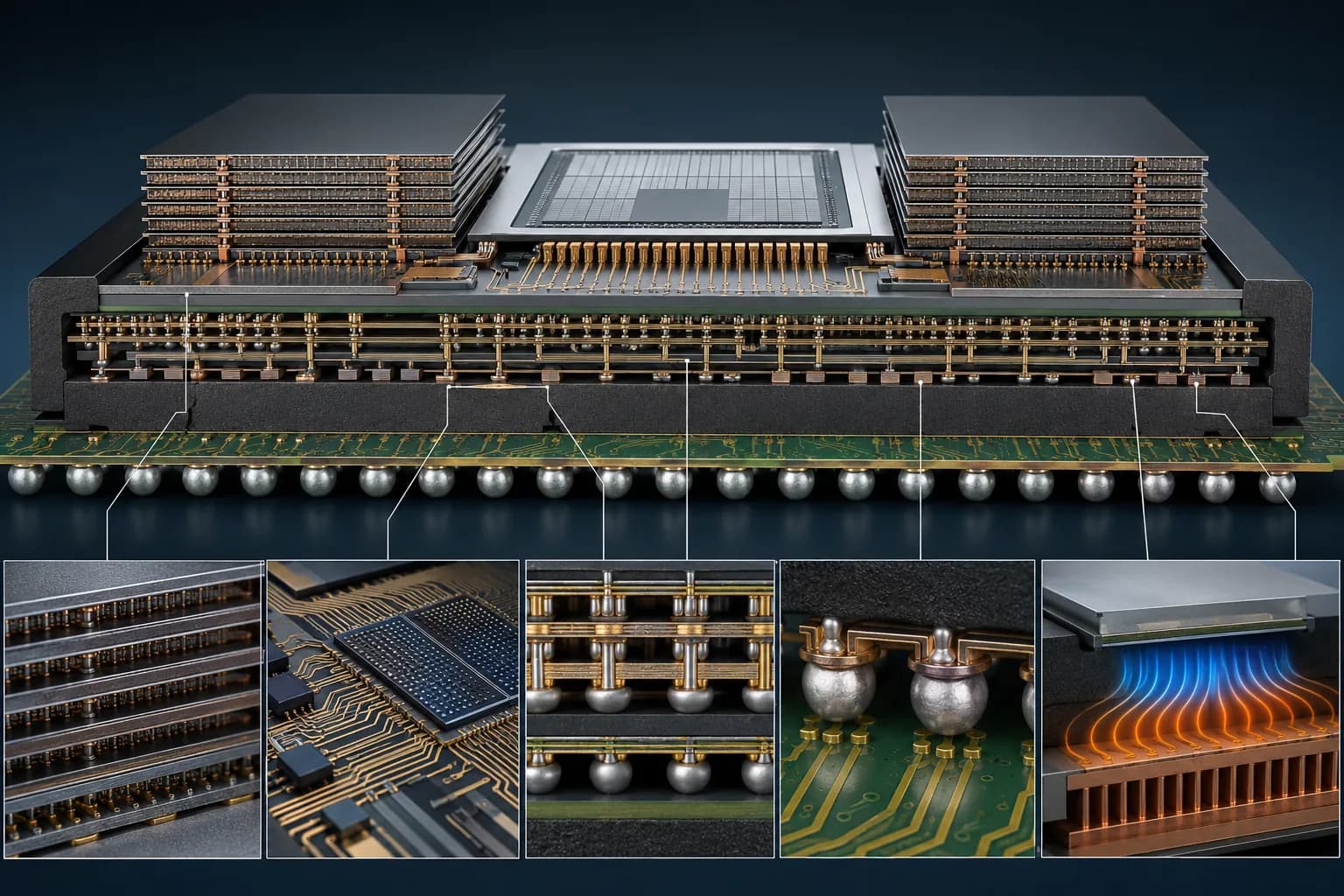
- What CoWoS and advanced packaging tell us
- Why this matters for GPU buyers, model builders, and local AI users
- Step-by-step way to read this signal practically
- Practical examples
- FAQ
- Conclusion
Why TSMC is trending right now
A current Google-trend-style spike around TSMC makes sense for two reasons.
First, the company remains one of the most important hidden layers of the modern AI boom. End users may search for NVIDIA, OpenAI, AMD, Apple, or Google, but underneath many of those product stories sits TSMC. When investors, developers, and supply-chain watchers want to know whether AI demand is cooling off or accelerating, TSMC's results are one of the clearest signals available.
Second, the Q1 2026 report did not read like a cautious company talking down expectations. TSMC reported strong growth, raised guidance, and described AI-related demand as "extremely robust" in its earnings call. That language matters because it suggests the current wave is not only a one-quarter spike or a marketing story driven by model demos.
This is why search interest tends to return whenever TSMC reports. People are not only asking how much money the company made. They are asking what the numbers reveal about the entire AI stack.
What TSMC reported in Q1 2026
TSMC's official earnings release for the quarter ended March 31, 2026 reported:
- NT$1,134.10 billion in consolidated revenue
- NT$572.48 billion in net income
- diluted EPS of NT$22.08
- US-dollar revenue of $35.90 billion
- year-over-year revenue growth of 40.6% in US-dollar terms
The company also reported a gross margin of 66.2% and an operating margin of 58.1%, which are unusually strong numbers in any manufacturing business, let alone one spending heavily to expand capacity.
Just as important is the composition of that revenue. TSMC said 3-nanometer accounted for 25% of total wafer revenue, 5-nanometer accounted for 36%, and 7-nanometer for 13%. Together, advanced technologies of 7-nanometer and below made up 74% of total wafer revenue.
That mix tells a bigger story than the headline growth number. The industry is still paying a premium for advanced process leadership, and the appetite for leading-edge silicon is not fading.
TSMC's guidance also stayed strong. For Q2 2026, the company guided revenue to roughly $39.0 billion to $40.2 billion. On the earnings call, management also said full-year 2026 revenue is now expected to grow by above 30% in US-dollar terms.
Why AI demand matters more than the headline revenue
The most important line from the earnings call may not be the revenue number at all. TSMC explicitly said AI-related demand remains extremely robust, and management tied that strength to the industry's shift from generative AI chat usage toward more agentic systems that consume more compute and more tokens.
That is a useful detail because it connects manufacturing demand to actual workload patterns. If AI systems are becoming more action-oriented, more tool-using, and more persistent, then the compute appetite underneath them also rises. That does not only benefit model labs. It increases demand across accelerators, HBM-linked designs, advanced packaging, datacenter expansion, and the foundry capacity needed to support all of it.
TSMC also said customer signals remain positive, especially from cloud service providers and the customers behind them. This matters because hyperscaler behavior is often a leading indicator. When those buyers keep spending, it is harder to argue that AI infrastructure demand is already rolling over.
There is a useful caution here too. Strong demand does not mean unlimited supply or perfect economics for everyone. It means the leading part of the stack remains valuable and capacity-constrained enough that manufacturing decisions still shape what the rest of the market can build and ship.
What CoWoS and advanced packaging tell us
A lot of casual tech coverage still talks about AI chips as if compute performance lives only inside the GPU die. That is incomplete now. Advanced packaging, interconnect choices, HBM integration, and packaging throughput are a huge part of the real story.
TSMC's broader commentary around demand and capacity planning reinforces that. When the company lifts capital spending, expands node capacity, and keeps leaning into AI-linked demand, it is not reacting to a single component. It is reacting to a system-level bottleneck picture.
CoWoS, in particular, has become shorthand for one of the industry's most important pressure points. If you are building high-end AI hardware, packaging availability can shape shipment timing almost as much as wafer supply. That is why TSMC's advanced packaging trajectory matters to anyone watching NVIDIA, AMD, custom accelerator programs, or the next generation of hyperscaler AI hardware.
The practical takeaway is that AI hardware growth is no longer only a "who has the best model" question. It is also a "who can secure the right manufacturing and packaging path" question. TSMC sits in the middle of that reality.
Why this matters for GPU buyers, model builders, and local AI users
Not every ToolMintX reader is ordering datacenter accelerators, but the TSMC signal still matters.
If you are a startup building on AI APIs, TSMC demand trends can affect pricing pressure, model availability, and how aggressively providers expand inference capacity.
If you are an infrastructure buyer, strong leading-edge demand means you should not assume easy access, soft pricing, or instant supply normalization across high-performance parts.
If you are a local AI enthusiast, the story matters in a more indirect but still important way. When the top of the stack stays hungry for advanced silicon and packaging, it influences the broader GPU market, the timing of product rollouts, and what eventually becomes practical in workstation and prosumer environments.
This is also where ToolMintX's AI VRAM Calculator fits naturally. Many readers jump from "new model launch" to "can I run this?" without doing enough hardware math. In a market where capacity is still tight and AI demand remains strong, realistic VRAM planning is not optional. It saves time, avoids bad purchases, and helps separate marketing excitement from deployable workflow choices.
Step-by-step way to read this signal practically
If you want to turn the TSMC story into something useful, follow this sequence:
1. Separate revenue hype from infrastructure meaning
Do not stop at "TSMC beat expectations." Ask what part of the stack the results are validating.
2. Watch advanced-node mix
When 3nm, 5nm, and 7nm account for such a large share of wafer revenue, the premium end of the market is still commanding serious demand.
3. Pay attention to guidance, not just the last quarter
Raised guidance tells you more about management confidence than a single backward-looking quarter.
4. Read AI demand comments carefully
TSMC's remarks about agentic AI and rising token consumption help explain why the compute story is still intensifying instead of flattening.
5. Translate the signal into your own decisions
If you are buying GPUs, planning deployments, or choosing between cloud and local inference, use this signal as a reminder to be realistic about capacity, timing, and hardware fit.
Practical examples
Example 1: A startup comparing cloud versus self-hosted inference
If high-end AI infrastructure remains tight and expensive, a hybrid plan may be smarter than assuming immediate self-hosted scale.
Example 2: A developer choosing a local model strategy
Instead of blindly chasing the biggest new open model, use realistic VRAM planning to pick a model size and quantization level your hardware can actually run.
Example 3: A team watching GPU purchase timing
TSMC's results are a reminder that upstream strength can keep pressure on premium AI hardware availability longer than many buyers hope.
FAQ
Why is TSMC trending today?
Because fresh search interest is being driven by continued attention to TSMC's strong Q1 2026 results and what they imply about AI chip demand and supply-chain capacity.
What did TSMC report in Q1 2026?
TSMC reported NT$1,134.10 billion in revenue, NT$572.48 billion in net income, and $35.90 billion in US-dollar revenue for the quarter ended March 31, 2026.
Why does TSMC matter so much for AI?
Because many leading AI chips and advanced semiconductor products depend on TSMC's manufacturing and packaging capabilities.
What is CoWoS and why does it matter?
CoWoS is an advanced packaging technology widely associated with high-performance AI hardware. It matters because packaging throughput can become a bottleneck even when chip demand is strong.
What should ordinary tech readers take from this story?
The main lesson is that AI progress depends on manufacturing reality, not only model announcements. Strong TSMC demand suggests the infrastructure race is still very real.
Conclusion
TSMC is trending because it offers one of the clearest reality checks in the AI economy. Its Q1 2026 numbers show strong growth, heavy demand for leading-edge manufacturing, and continued confidence that AI infrastructure spending remains durable.
For readers, the most useful takeaway is not whether one stock popped or one headline looked impressive. It is that the AI race is still being shaped by physical constraints: fabs, packaging, advanced nodes, and supply chain timing. That is why TSMC matters far beyond Taiwan's earnings calendar.
If you build, buy, benchmark, or plan around AI systems, this is the right way to read the moment: the software story is still exciting, but the hardware bottlenecks have not disappeared. Use that reality to make better workflow decisions, better model choices, and better hardware bets.