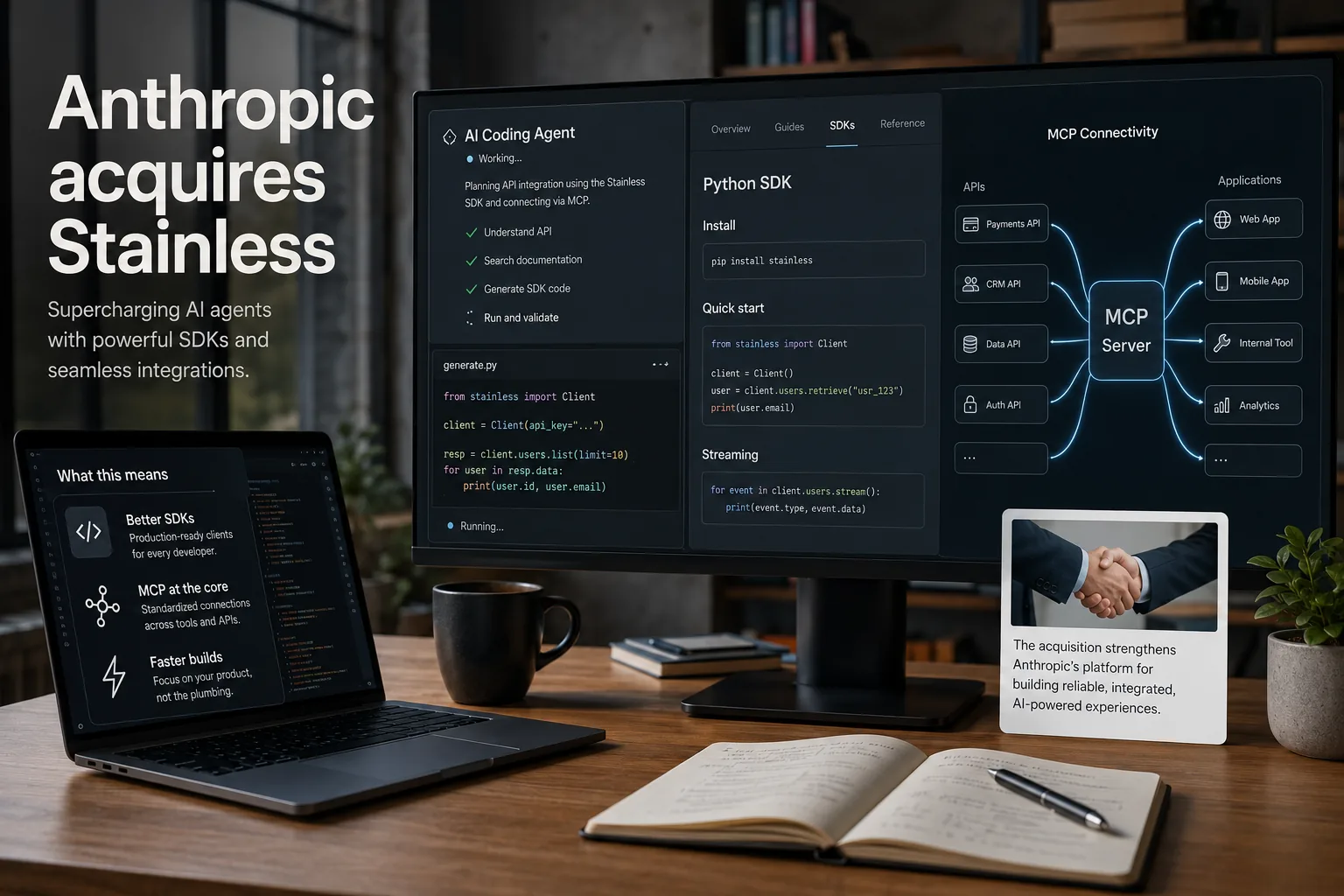
Anthropic acquires Stainless at a moment when AI companies are racing to improve much more than model quality. On May 18, 2026, Anthropic announced that it is acquiring Stainless, the developer tooling company that has powered Anthropic’s official SDK generation since the early days of the Claude API. That makes this more than a simple startup acquisition. It is a signal that Anthropic wants tighter control over how developers reach Claude, how APIs become usable products, and how agent systems connect to the rest of the software stack.
For developers, the interesting part is not just the deal itself. The bigger question is what happens next for Claude Code, the Anthropic API, MCP-based workflows, and the day-to-day experience of building agentic products. If Anthropic executes well, this move could make Claude easier to integrate, easier to automate, and harder to ignore in serious production environments.
Anthropic Acquires Stainless: Why This Deal Matters
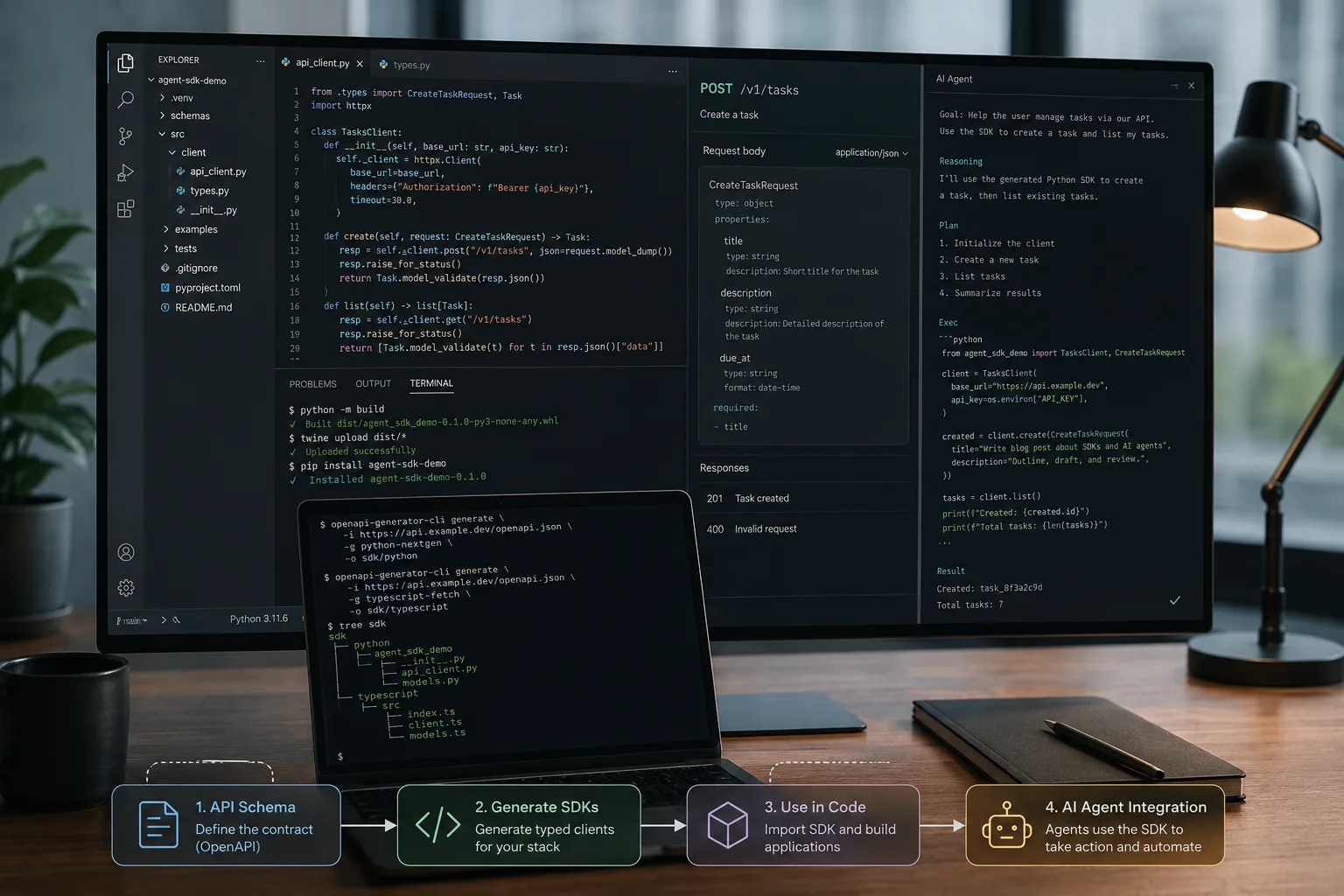
Anthropic’s announcement was short, but the implications are broad. The company said Stainless has powered every official Anthropic SDK since the earliest days of its API. That is a meaningful detail because SDK quality often shapes whether a model platform feels polished or frustrating.
Good SDKs reduce friction in a few practical ways:
- They keep language bindings consistent across Python, JavaScript, and other environments.
- They reduce the chance that docs drift away from real API behavior.
- They make version changes easier to ship safely.
- They help internal platform teams publish tools, connectors, and CLI workflows faster.
In the agent era, that matters even more. Developers are no longer wiring up one prompt endpoint and calling it a day. They are building multi-step systems with tools, structured outputs, computer use, local components, retrieval, and external services. A rough SDK becomes a real productivity tax in that world.
Why Stainless Fits Claude Code and MCP So Well
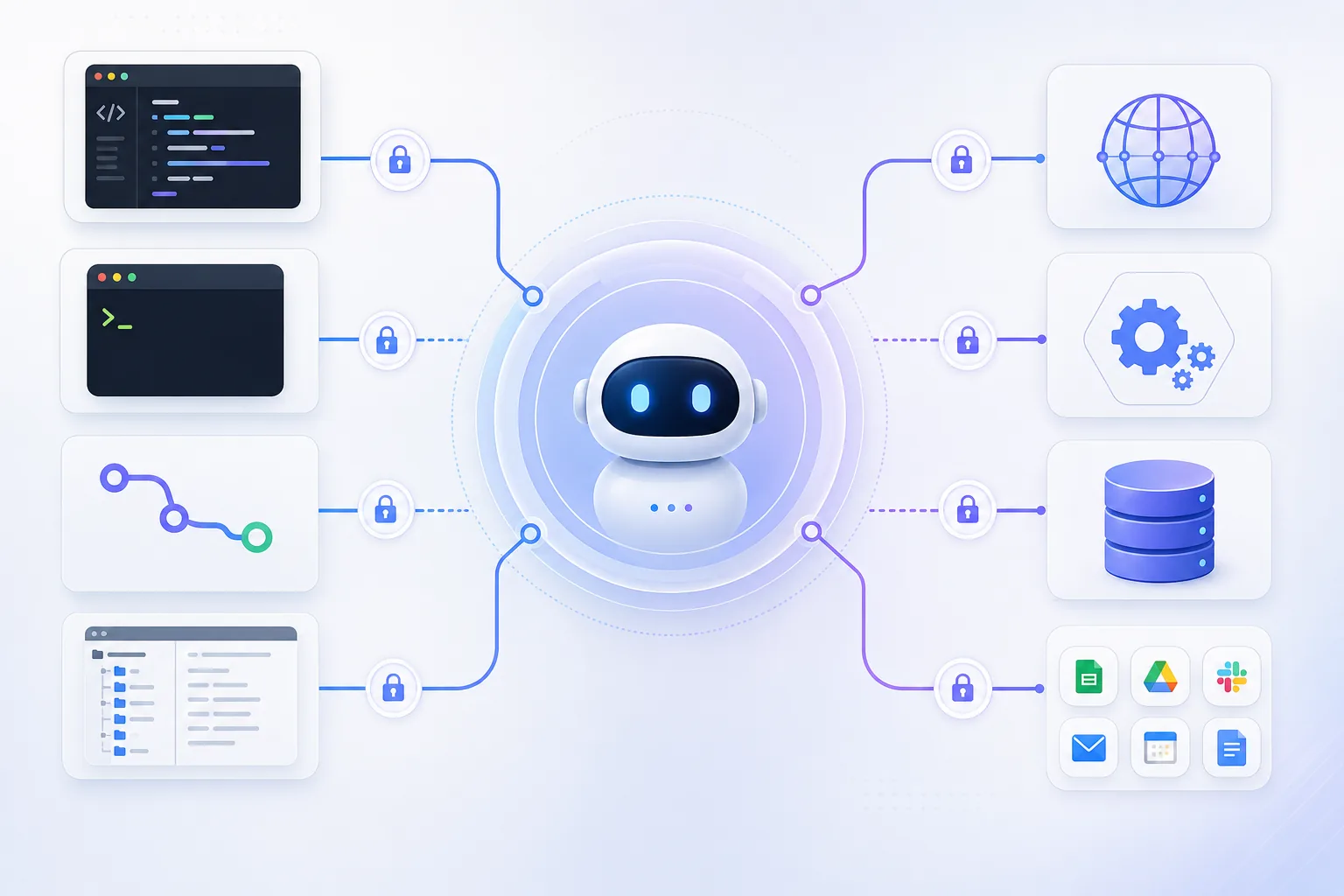
Stainless is not just relevant because it helps generate SDKs. It sits close to the exact layer where agent products either become easy to adopt or painfully manual.
Claude Code users care about fast iteration, reliable CLI behavior, predictable schemas, and tools that do not break when APIs evolve. MCP users care about something similar from a different direction: they want clean, dependable ways to expose tools and services to AI systems without rebuilding integrations from scratch.
That is why this acquisition feels strategically aligned with Anthropic’s broader platform direction.
| Area | Why it matters after the acquisition | Likely developer benefit |
|---|---|---|
| Official SDKs | Anthropic can improve the libraries it already depends on internally | Cleaner docs, faster feature parity, fewer rough edges |
| Claude Code workflows | Better tooling infrastructure can improve CLI and automation experiences | More reliable agent setup and scripting |
| MCP ecosystem | Stronger connector-generation tooling could reduce integration friction | Faster tool exposure for agent apps |
| API rollouts | Anthropic can coordinate product, API, and SDK changes more tightly | Less lag between launch day and usable implementation |
This does not guarantee a flood of new features next week. But it does suggest Anthropic sees developer experience as core product infrastructure, not a support function around the model.
What Developers Should Watch Closely
The first thing to watch is whether Anthropic uses the Stainless team and technology to tighten release quality across its platform. When a model vendor launches a new tool call, structured output format, or agent feature, developers usually ask the same questions:
- Is the SDK ready on day one?
- Are the examples production-friendly?
- Does the CLI support the new workflow cleanly?
- Are there safe migration paths for older integrations?
If Anthropic starts answering those questions better than competitors, that could become a real platform advantage.
The second thing to watch is how this affects MCP and adjacent tool standards. Anthropic has already helped popularize MCP as a practical way to connect models to tools and data sources. Owning more of the connector and SDK generation layer could let it shape a smoother end-to-end path from API spec to working agent environment.
That would matter for teams building:
- internal coding agents
- support automations
- AI copilots with tool use
- desktop or CLI agent workflows
- enterprise systems that need strong schema discipline
The third thing to watch is competitive fallout. Stainless has been used in a wider developer-tooling world, not only inside Anthropic. That means some companies may now revisit how they generate and maintain SDKs, especially if they do not want a strategically important layer tied to a rival AI company.
The Risk Side of the Story
There is also a less comfortable reading of this deal. If the best infrastructure around agent connectors and SDK generation gets absorbed into a major model platform, parts of the ecosystem may become more centralized.
That does not automatically hurt developers, but it can change incentives. Tooling that once served many vendors neutrally may begin to favor one platform’s priorities. Competing AI labs and independent developer teams could respond by investing more in open alternatives, internal generators, or protocol-first workflows that reduce vendor dependency.
So the acquisition has two possible outcomes at once:
- Anthropic could ship better tooling, faster, and make Claude noticeably easier to build on.
- The broader ecosystem could become more cautious about letting a single AI company control too much of the agent integration layer.
Both interpretations can be true at the same time.
What This Means for ToolMintX Readers Right Now
If you use Claude Code, the immediate takeaway is simple: pay attention to Anthropic’s developer-platform updates over the next few months, not only its model launches. The most valuable improvements may show up as better SDK releases, more dependable automation hooks, stronger MCP support, and smoother agent deployment patterns.
If you build with APIs, this is also a reminder that distribution quality matters. Model performance gets headlines, but developer adoption often depends on the boring-looking layer underneath: SDKs, examples, connectors, schemas, and release discipline.
That is exactly why Anthropic acquires Stainless matters. It points to a future where the winners in AI may be the companies that not only train strong models, but also make those models dramatically easier to turn into real tools.
For more ToolMintX context, pair this with our guide to Claude Code rate limits and the developer workflow coverage in Google Antigravity 2.0.
Conclusion
Anthropic acquires Stainless at a time when AI platforms are competing on workflow quality as much as raw intelligence. For Claude Code users, MCP builders, and API developers, this could become one of the more important platform moves of May 2026. If Anthropic turns Stainless into better SDKs, better connectors, and smoother agent workflows, the Claude ecosystem becomes more attractive in a very practical way.
The deal is worth watching not because acquisitions are exciting by default, but because developer tooling now sits directly on the critical path to AI adoption.
FAQ
What is Stainless?
Stainless is a developer tooling company known for generating production-grade SDKs from API specifications. Anthropic said Stainless has powered its official SDKs since the early days of the Claude API.
Why does the Stainless acquisition matter for Claude Code?
Claude Code depends on reliable tooling layers around APIs, schemas, examples, and automation. Stronger SDK infrastructure can make coding-agent workflows smoother and easier to maintain.
Does this change MCP right away?
Not necessarily. Anthropic did not announce a specific MCP product change in the acquisition post. But the deal strengthens the tooling layer that can make MCP-based integrations easier to build and ship.
Should developers expect immediate new features?
Probably not overnight. The bigger value is likely to appear over the next several product cycles as Anthropic aligns API launches, SDK updates, and agent tooling more tightly.