Intro
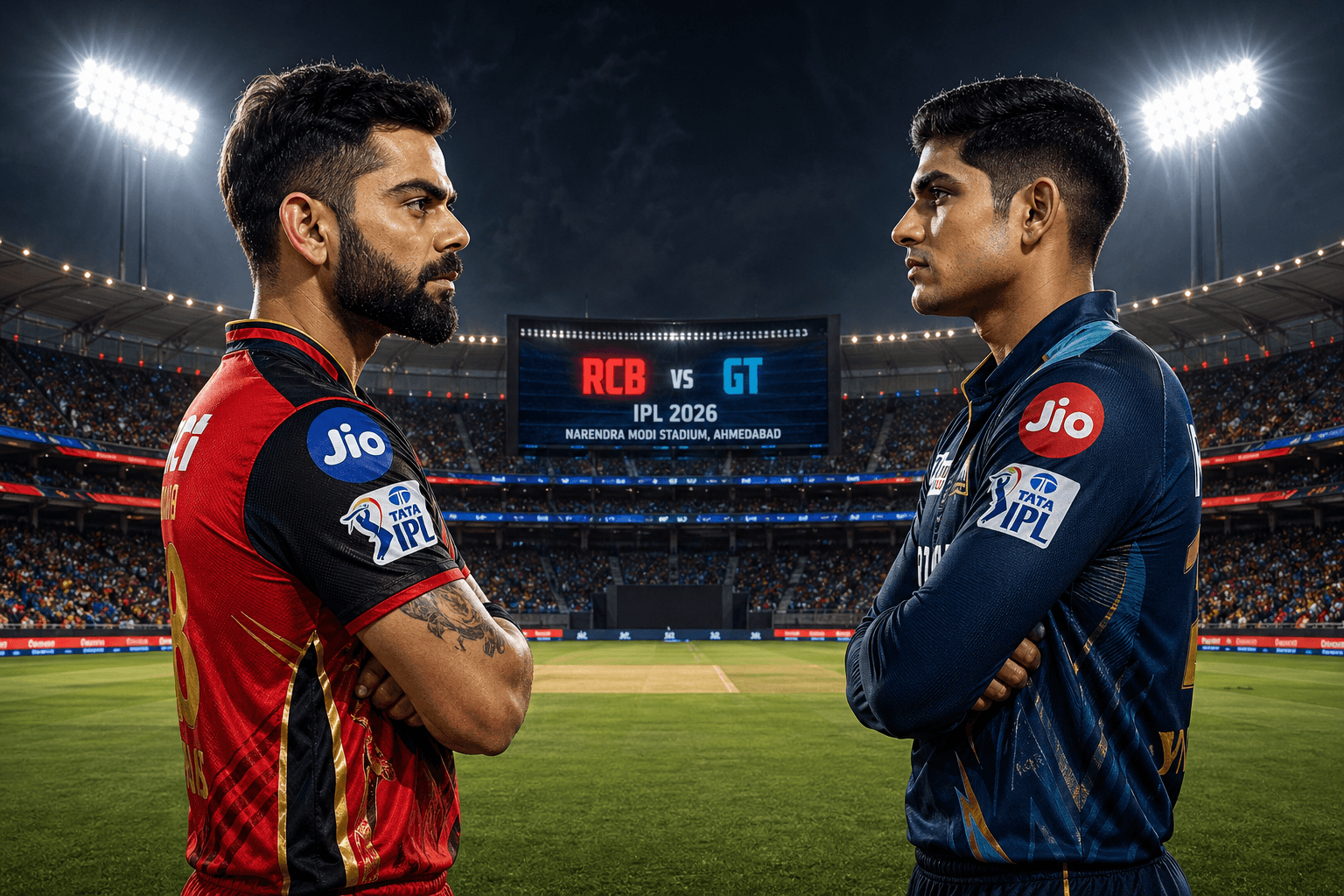
At first glance, Royal Challengers Bengaluru being bowled out for 155 against Gujarat Titans in Ahmedabad looks like a simple batting failure. But this IPL 2026 contest has been more interesting than the raw score suggests. RCB started with intent, Virat Kohli lit up the powerplay, and then the innings broke apart under disciplined bowling, sharp catching, and scoreboard pressure. That sequence matters because it shows the difference between a fast start and a controlled innings in T20 cricket.
This blog is written at the innings break on April 30, 2026, after RCB were dismissed for 155 in 19.2 overs. Gujarat Titans won the toss and chose to field at Narendra Modi Stadium, a venue where chasing often becomes more attractive as the night settles in. So the real question is not only whether 156 is enough. It is what RCB's collapse tells us about form, matchups, and how modern IPL games are won.
Table of Contents
- Match Snapshot
- How RCB Went From Early Momentum to 155 All Out
- Why GT's Bowling Plan Worked
- Is 156 Enough in Ahmedabad?
- What RCB Still Has Going for It
- Step-by-Step: How to Read a T20 Collapse Like This
- Practical Examples for Readers and Fantasy Followers
- FAQ
- Conclusion
Match Snapshot
The game had a high-voltage setup even before the first ball. RCB came into the match pushing for the top spot in the table, while GT needed a win to stay close to the playoff race. That gave the contest two very different kinds of pressure. RCB had momentum to protect. GT had urgency.
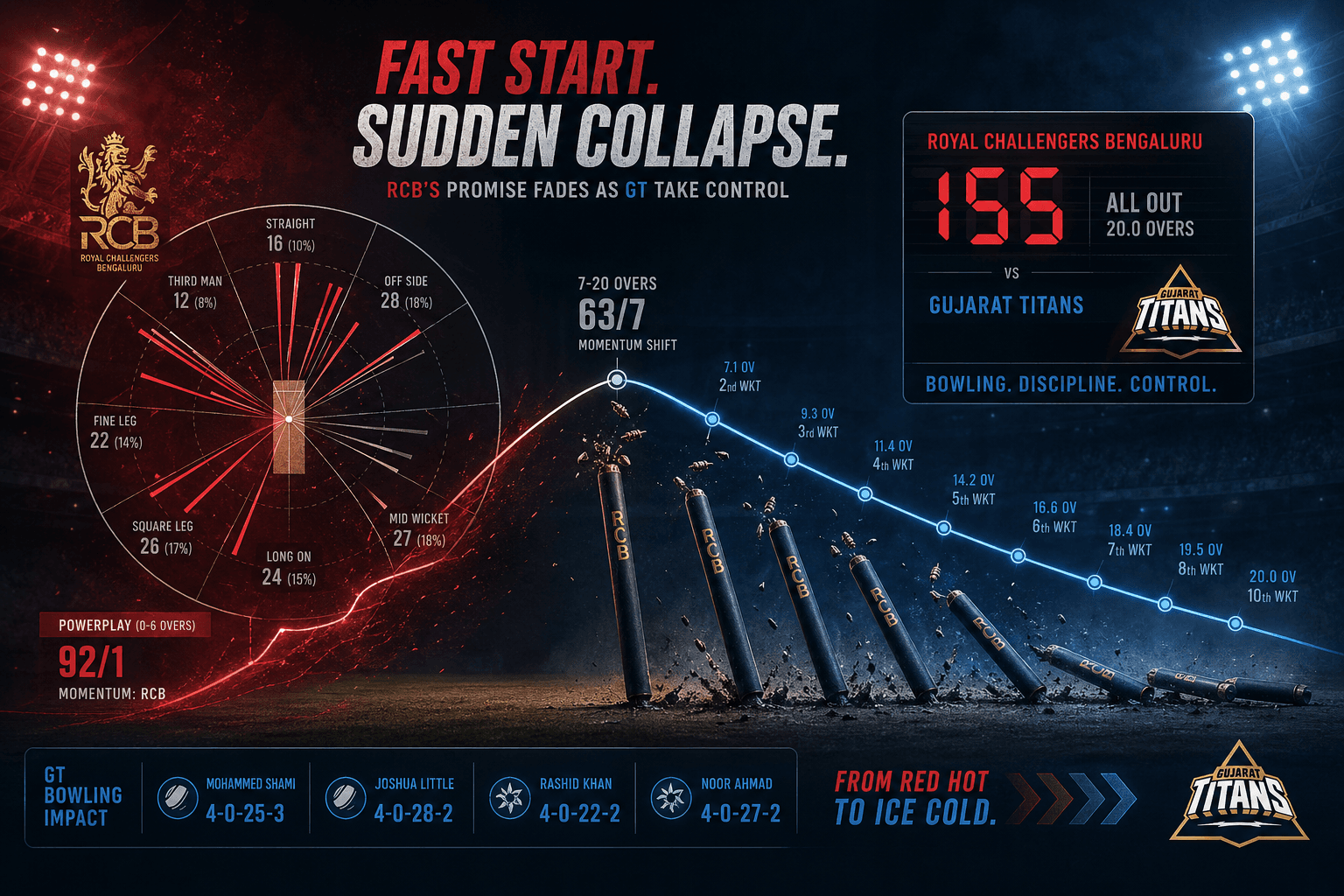
The first phase looked ideal for Bengaluru. Kohli attacked Kagiso Rabada early and smashed five boundaries in one over, which immediately changed the mood of the innings. But the middle overs became a different match. Gujarat slowed the tempo, forced miscued shots, and kept taking wickets in clusters. By the time the late-order repair job began, RCB were playing catch-up rather than setting up a serious 180-plus total.
At the time of writing, the core facts are these: GT won the toss and fielded first, RCB were all out for 155 in 19.2 overs, and the chase is set against a ground that often rewards calm batting in the second innings.
How RCB Went From Early Momentum to 155 All Out
RCB's innings is a useful reminder that T20 momentum is fragile. A blazing start does not automatically produce a strong total if the batting side loses control of phase management.
The warning sign was not that RCB started too fast. The real problem was that the innings became too dependent on the top-order burst. Once Kohli fell, the shot-making rhythm broke. Gujarat immediately turned the innings into a wickets game instead of a boundary game.
A few things stood out.
First, GT did not panic after the early boundaries. That matters. Good T20 bowling sides know that one expensive over does not define the innings. They stayed on harder lengths, mixed pace sensibly, and trusted the big moments to come.
Second, RCB's middle order never got a settled platform. T20 teams can recover from one wicket. Recovering from repeated breaks in momentum is much harder. Jitesh Sharma, Tim David, Krunal Pandya, and others were forced into impact decisions rather than controlled batting. Once that happened, GT could keep fielders in useful catching positions and attack mistakes.
Third, Jason Holder and Rashid Khan gave Gujarat exactly what a chasing side wants from its bowlers: control plus wickets. Rashid's spell did not just cut scoring. It also squeezed confidence. Holder added pressure through catches and wickets, which turned ordinary overs into turning points.
Devdutt Padikkal briefly kept RCB alive, and the lower order pushed the total into the mid-150s, but the recovery never quite changed the script. In Ahmedabad, 155 is not impossible to defend. It is simply a total that demands discipline from ball one.
Why GT's Bowling Plan Worked
The best way to understand GT's performance is to see it as a sequence rather than a highlight package.
They absorbed the powerplay hit.
They separated Kohli's burst from the rest of the innings.
They attacked the new batter instead of defending against the previous over.
They made RCB rebuild repeatedly.
That is how T20 bowling sides win even after conceding an early flurry.
Rashid Khan's role was especially important because he changed the shape of decision-making. Batters who might normally take singles and reset often feel pressure to manufacture a release shot against him. When wickets are already falling, that pressure doubles.
There was also a psychological edge in Gujarat's fielding. Sharp catching kept the pressure real. A dropped catch in this kind of innings can open a 25-run swing. GT did not give RCB that escape route.
For readers trying to understand the tactical side of the IPL, this match is a good example of why bowling depth matters more than a single headline spell. GT did not need magic. They needed control from multiple points of the innings, and they got it.
Is 156 Enough in Ahmedabad?
This is where the match becomes genuinely interesting. Narendra Modi Stadium is widely seen as a venue where batting can open up, especially under lights. The official pre-match pitch update also pointed toward a good batting surface, with dew likely to help the chasing side later in the evening.
On paper, that gives Gujarat the advantage. A target of 156 should be manageable for a batting group built around Shubman Gill, Sai Sudharsan, and Jos Buttler. They do not need heroics. They need clean powerplay batting and a sensible middle phase.
But chases of this size can still become awkward. That is the trap. A sub-160 target often looks easier than it feels because the batting side can become passive. If RCB get an early wicket or two, the required rate stays low enough to hide pressure until one tight over suddenly changes everything.
So yes, GT should start favourites from here. But this is not yet a one-sided finish. It is the sort of chase where the first three overs and the first wicket matter more than the scoreboard headline.
What RCB Still Has Going for It
If Bengaluru are going to turn this around, their path is fairly clear.
They need Josh Hazlewood and Bhuvneshwar Kumar to make the new ball count. A flat chase becomes less comfortable if GT lose one of Gill or Sudharsan early.
They also need their spinners and change-of-pace bowlers to defend the middle overs intelligently rather than hunting miracle wickets every ball. With only 155 to defend, dot-ball pressure matters as much as wicket-taking aggression.
Most importantly, RCB need emotional control. Teams defending below-par scores often lose by rushing the game. One boundary cannot trigger panic. They need to bowl as if 175 were on the board, not as if the match is already slipping.
Step-by-Step: How to Read a T20 Collapse Like This
- Check whether the collapse came after a flying start or after a slow start. The story changes completely.
- Look at the wicket clusters, not just the final total. Repeated breaks usually matter more than one big over.
- Ask which bowler changed batter behaviour. In this match, Rashid's squeeze was a major factor.
- Separate scoring pressure from dismissal pressure. A side can still score quickly and lose control at the same time.
- Recalculate the chase in venue context. A target of 156 in Ahmedabad is different from 156 on a slower track.
Practical Examples for Readers and Fantasy Followers
If you are a casual reader, this match is a simple lesson in why early aggression is not the same as innings command. RCB won the first impression but lost the long passage.
If you follow fantasy cricket, the match underlines why balanced bowling units are gold. Wicket-taking all-round influence from players like Holder, plus control from Rashid, often beats a single batting-heavy strategy.
If you create content around live sports, this is also the kind of game where workflow tools help. A platform like ToolMintX is most useful when you want to turn live notes into quick explainers, headlines, image prompts, and social-ready summaries without making the copy sound rushed or generic.
FAQ
Why is RCB vs GT trending today?
Because the April 30, 2026 IPL clash carries both playoff pressure and star-player attention, with Virat Kohli and Shubman Gill at the center of the story.
What was RCB's score against GT at the innings break?
RCB were all out for 155 in 19.2 overs at the time this article was written.
Who had the edge after the first innings?
GT had the edge because they only needed 156 in Ahmedabad after winning the toss and choosing to chase.
Is 155 always a poor score in T20 cricket?
Not always. It depends on venue, pitch behaviour, bowling attack, and scoreboard pressure. In Ahmedabad under lights, it is usually below the comfort zone.
What changed the innings most?
The key shift was RCB losing continuity after the early surge. GT's bowlers kept taking wickets before any recovery partnership could settle.
Conclusion
The most useful way to read RCB vs GT is not as a simple story of one team underperforming. It is a story about phase control. RCB showed how explosive powerplay batting can still leave a team exposed if the middle overs break down. GT showed how a disciplined bowling unit can wait out early damage and still take command.
By the time the chase begins, Gujarat clearly hold the stronger hand. But the match still offers a sharper lesson than the score alone suggests: in IPL 2026, the best teams are not just the ones that start hard. They are the ones that keep the innings connected.
Sources
- IPL official pre-match venue and pitch note, published April 28, 2026.
- NDTV Sports live match coverage, updated April 30, 2026.