Intro
If you noticed Google or google share price trending today, April 30, 2026, the reason is not just a market story. It is a technology story.
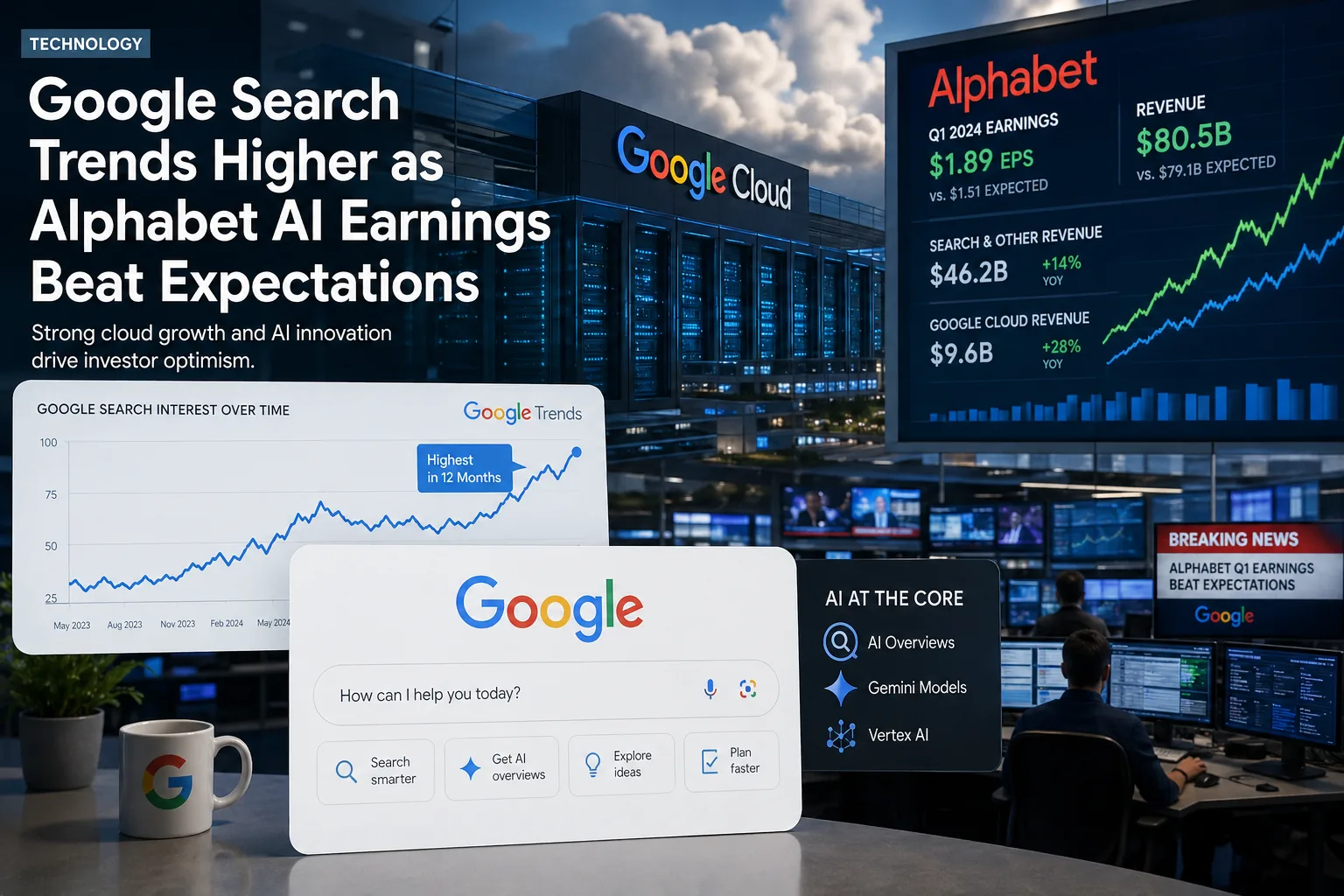
Alphabet’s latest quarterly results landed on April 29, 2026, and they gave the clearest public signal yet that Google’s AI push is no longer a side experiment. It is starting to reshape the company’s search products, cloud business, infrastructure spending, and product roadmap all at once.
That is why this moment deserves a proper tech explainer instead of a stock-ticker summary.
The short version is simple:
- Alphabet reported a very strong quarter
- Google Cloud crossed a new scale milestone with AI demand as a major driver
- AI features such as AI Overviews and AI Mode are becoming central to how Google talks about search growth
- the company is spending aggressively because the AI race now depends on infrastructure as much as product design
For regular readers, developers, marketers, founders, analysts, and power users, the interesting question is not whether the stock popped. It is what Google’s numbers tell us about where everyday AI products are heading next.
Table of Contents
- Why Google is trending today
- The biggest numbers from Alphabet’s Q1 2026 results
- What AI Mode and AI Overviews mean now
- Why Google Cloud matters more than ever
- The hidden story: infrastructure and spending
- What this means for users and builders
- Practical examples
- FAQ
- Conclusion
Why Google Is Trending Today
Google Trends-style interest today appears to be tied to Google’s share-price reaction and Alphabet’s earnings results, which came out on April 29, 2026. News coverage and trend aggregators quickly linked the spike to stronger-than-expected numbers, especially around cloud growth and AI demand.
That kind of search spike happens when a big company stops being just “in the news” and becomes the answer to a bigger public question. In this case, that question is: Is Google actually winning in the AI era, or only defending its old business?
Alphabet’s new results pushed a lot of people toward the first answer.
The Biggest Numbers From Alphabet’s Q1 2026 Results
From Alphabet’s Q1 2026 report:
- $109.9 billion in revenue
- about $62.6 billion in net income
- roughly $20 billion in Google Cloud revenue
- 63% year-over-year Google Cloud growth
The standout is cloud. It is no longer a supporting character in the Google story.
For years, people spoke about Google as Search first, YouTube second, and Cloud as a promising but smaller business. That framing is getting weaker. Cloud is now one of the main ways Google monetises the AI boom, because businesses do not only want chatbots. They want:
- model access
- inference capacity
- storage and data pipelines
- orchestration and deployment tools
- enterprise security and governance
That is why the cloud numbers matter more than the stock reaction. They show where AI demand becomes revenue.
What AI Mode and AI Overviews Mean Now
This is where the story becomes more interesting for normal users.
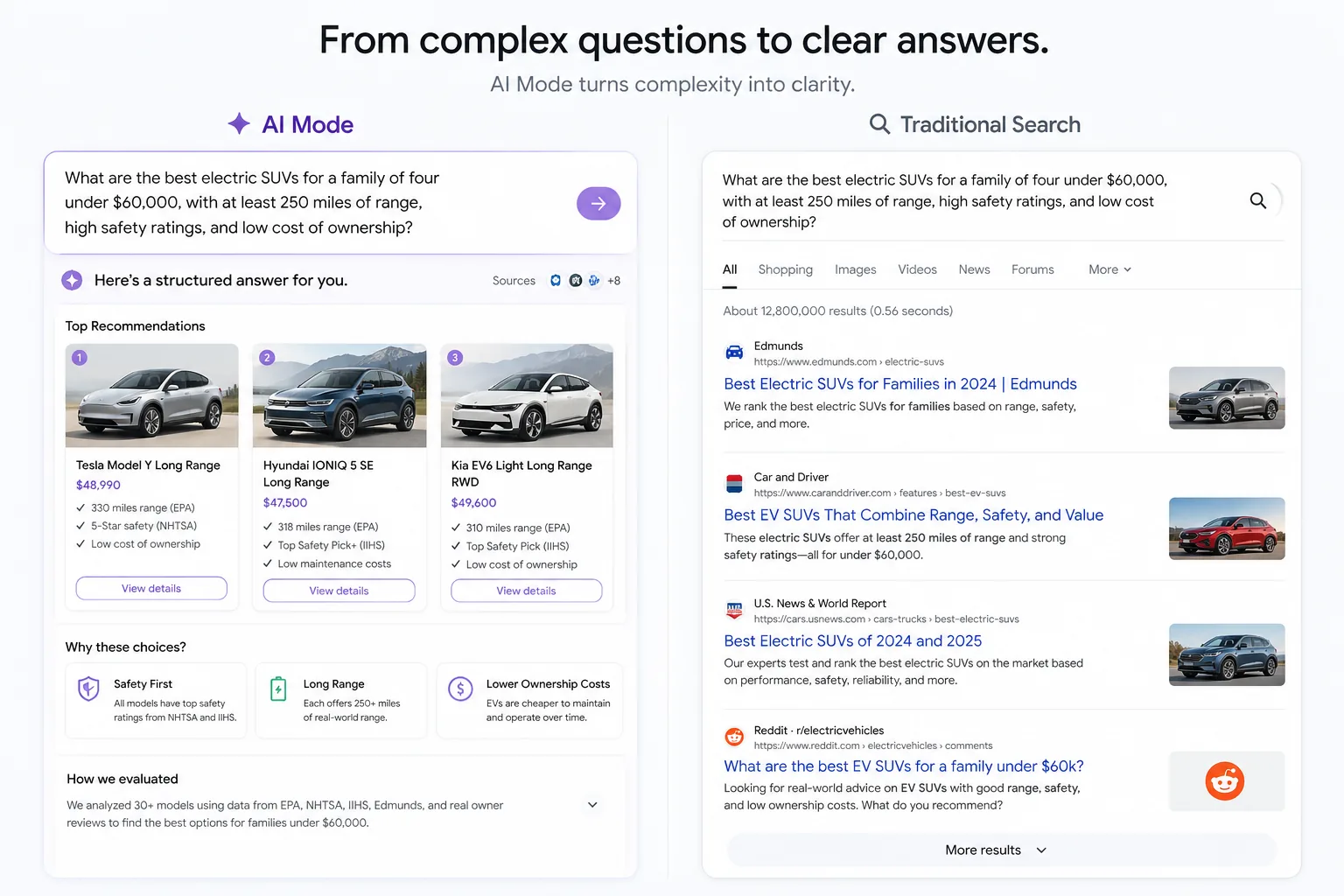
Google has been gradually turning AI from a separate assistant idea into a layer inside Search itself. AI Overviews already showed that direction. AI Mode pushes it further by giving users a more reasoning-heavy search experience for complex queries.
When Google’s leadership highlights AI Overviews and AI Mode alongside overall search growth, it signals something important: Google is trying to prove that AI answers are not killing Search. Instead, Google wants investors, publishers, and users to believe AI is making Search more useful, more engaging, and more monetisable.
That is a huge strategic message.
It means Google is betting that:
- users will keep asking harder questions inside Google
- AI-generated responses can still sit inside a web ecosystem
- monetisation can adapt instead of collapsing
- product trust and response quality matter just as much as model quality
For anyone publishing content online, this is not a small detail. It affects how articles are discovered, summarised, and surfaced.
For ToolMintX readers, that is where the practical workflow change begins. If AI summaries become a stronger front layer for search behaviour, then content teams, solo site owners, and developers need cleaner structure, better factual clarity, stronger headings, and more explicit answer formatting. AI-first search rewards pages that are easier to parse, quote, summarise, and verify.
Why Google Cloud Matters More Than Ever
Cloud growth is the proof that Google’s AI story is not just consumer-facing.
A lot of AI coverage still treats the entire market as a chatbot popularity contest. That misses how enterprise demand really works. The companies spending serious money want platforms they can build on top of, not just public-facing demos.
Google Cloud is where Gemini models, enterprise AI services, data infrastructure, and deployment tooling meet. If that business is accelerating this hard, it suggests that companies are buying more than curiosity. They are buying implementation capacity.
This matters in three ways:
1. AI budgets are moving from experimentation to operations
When cloud growth accelerates on AI demand, it usually means teams are moving beyond pilot projects.
2. Infrastructure is becoming a product advantage
It is no longer enough to have a good model. Companies need the compute, data centres, hardware, networking, orchestration, and developer tooling to deliver the model reliably.
3. The real AI race is stack-wide
The winner will not be the company with only the best demo. It will be the company that can connect models, search, ads, enterprise software, hardware, and developer platforms into one durable system.
Google’s quarter suggests it is leaning into exactly that model.
The Hidden Story: Infrastructure and Spending
One reason these results are getting so much attention is that they support a broader trend across Big Tech: AI is becoming an infrastructure war.
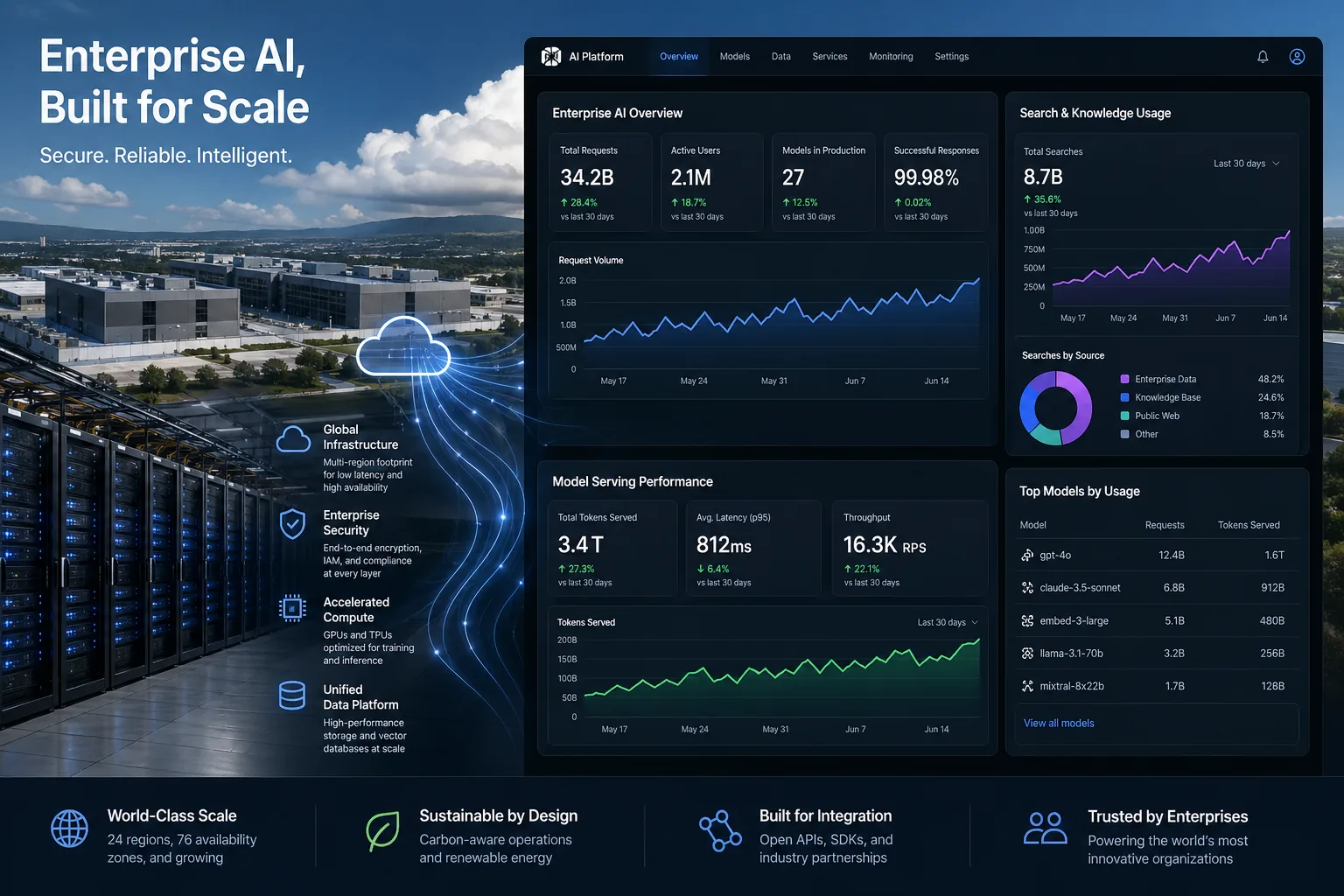
That means more spending on:
- data centres
- chips and accelerators
- power and cooling
- networking
- model serving
- enterprise distribution
This is the part many readers miss when a story gets reduced to “Google stock went up.”
The more useful reading is this: Google is showing that large AI spending can still produce visible business momentum when it feeds both product usage and cloud demand. That does not remove risk. It simply shows that the market currently believes the spending is tied to real demand rather than empty positioning.
For builders, this matters because it changes what “AI competition” means in practice. The bottleneck is often not creativity. It is access to reliable infrastructure, affordable inference, distribution, and product integration.
What This Means for Users and Builders
Here is the practical takeaway from all this.
If you are a user
Expect Google products to keep pushing deeper AI-assisted answers, summaries, comparisons, and task completion flows.
If you are a publisher
You need articles that are clearer, better structured, and easier for both humans and AI systems to interpret. Thin SEO writing becomes even weaker in this environment.
If you are a developer or startup team
Watch the cloud story closely. The strongest signal from this quarter is not only consumer AI usage. It is that enterprise AI infrastructure is becoming a major buying category.
If you run a digital workflow business
This is the moment to improve how your content, data, and utilities are organised. ToolMintX-style workflows around formatting, extraction, prompt cleanup, summarisation, and structured answer generation become more useful when AI systems sit between users and raw web pages.
Step-by-Step: How to Read This Trend Without Getting Misled
-
Start with the date.
The key trigger here is Alphabet’s April 29, 2026 quarterly report, not a random rumour. -
Separate stock noise from product signal.
The price reaction is the surface-level event. The deeper signal is cloud growth plus AI product usage. -
Look at where the demand is coming from.
Consumer AI alone is not enough. Enterprise cloud demand is what makes the story durable. -
Watch product integration, not just model branding.
AI Overviews and AI Mode matter because they sit inside mainstream Google behaviour. -
Track infrastructure commitments.
Big AI promises only matter if the company can actually serve the workloads at scale.
Practical Examples
Example 1: SEO teams
If you publish how-to content, update articles so that the answer to the core question appears clearly in the first section, followed by scannable steps and explicit FAQs. That gives both readers and AI systems cleaner signals.
Example 2: SaaS builders
If your app depends on search discovery, expect more users to encounter summarised answers before they click through. Your product pages and docs will need clearer technical positioning.
Example 3: Analysts and power users
Instead of reading this as a stock headline, track it as evidence that cloud AI demand is becoming easier to monetise than many critics expected.
FAQ
Why is Google trending today, April 30, 2026?
The strongest visible trigger is Alphabet’s Q1 2026 earnings release on April 29, 2026, followed by a strong market reaction and heavy discussion around Google Cloud growth and AI products.
What were the most important Alphabet Q1 2026 numbers?
About $109.9 billion in revenue, roughly $62.6 billion in net income, and about $20 billion in Google Cloud revenue with 63% year-over-year growth.
Why does AI Mode matter in this story?
Because it shows Google is integrating AI deeper into Search itself rather than treating AI as a separate side product.
Is this mainly a stock-market story?
No. The stock move explains the trend spike, but the bigger story is that Google’s AI strategy is showing up in search usage, cloud growth, and infrastructure planning at the same time.
What should website owners learn from this?
AI-heavy search experiences reward clear structure, strong facts, useful formatting, and genuinely helpful writing more than vague keyword-heavy content.
Conclusion
Google is trending today because Alphabet’s latest quarter gave people a clearer answer to one of 2026’s biggest tech questions: can AI become a real growth engine inside an internet giant without destroying the old business first?
For now, Google’s answer looks stronger than many expected.
The most important takeaway is not that the stock jumped. It is that AI Overviews, AI Mode, Google Cloud, and infrastructure spending are beginning to look like parts of one system rather than separate headlines. That is the real story, and it is the one builders should pay attention to.
Sources
- Trend aggregation indicating Google search interest spike on April 30, 2026
- Associated Press coverage of Alphabet’s Q1 2026 results, published April 29, 2026
- Reuters coverage of Alphabet cloud and AI demand, published April 29, 2026