Why Gemma 4 Could Be the Breakout Local AI Model of 2026
Google's Gemma 4 brings real reasoning, multimodal input, and agent-friendly features to laptops and edge devices. What changed and how to run it locally.
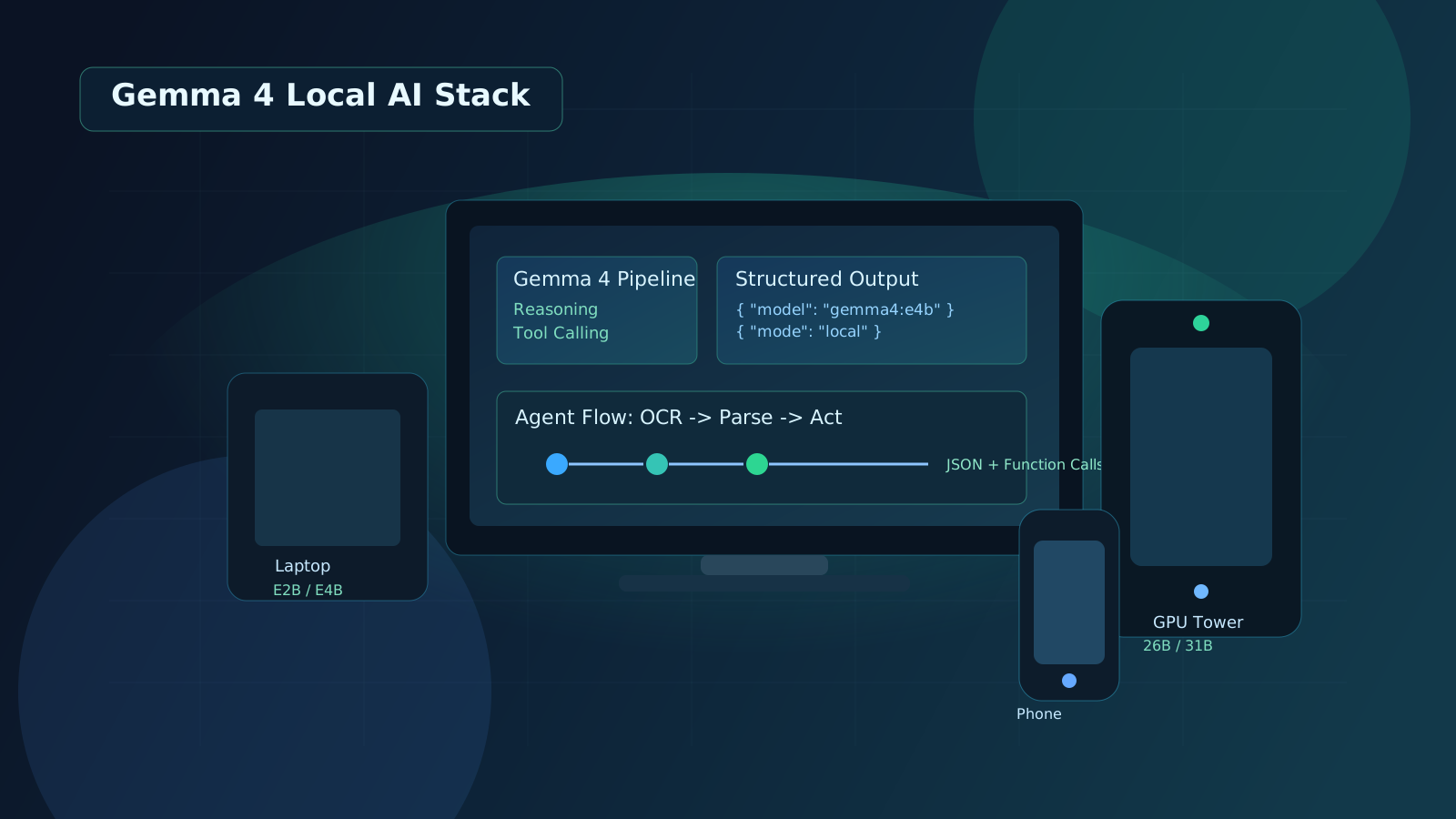
The Open Model Story Just Shifted Closer to Real Hardware
Google DeepMind's Gemma 4 launch narrows the gap between an interesting open model and a model you can run on hardware you already own. That matters more than one more benchmark chart.
Google positions Gemma 4 as a model family for advanced reasoning and agentic workflows, while also saying it is the most capable family you can run on your own hardware. That lands at exactly the moment developers are asking for models that can do real work without being locked to hyperscale cloud costs.
The key local-AI signal is ecosystem readiness on day one. Google highlighted support across tooling people already use: Ollama, LM Studio, Unsloth, llama.cpp, vLLM, MLX, NVIDIA NIM, and more. That made Gemma 4 feel like a usable stack release, not a paper launch.
What Changed With Gemma 4
The lineup is unusually practical
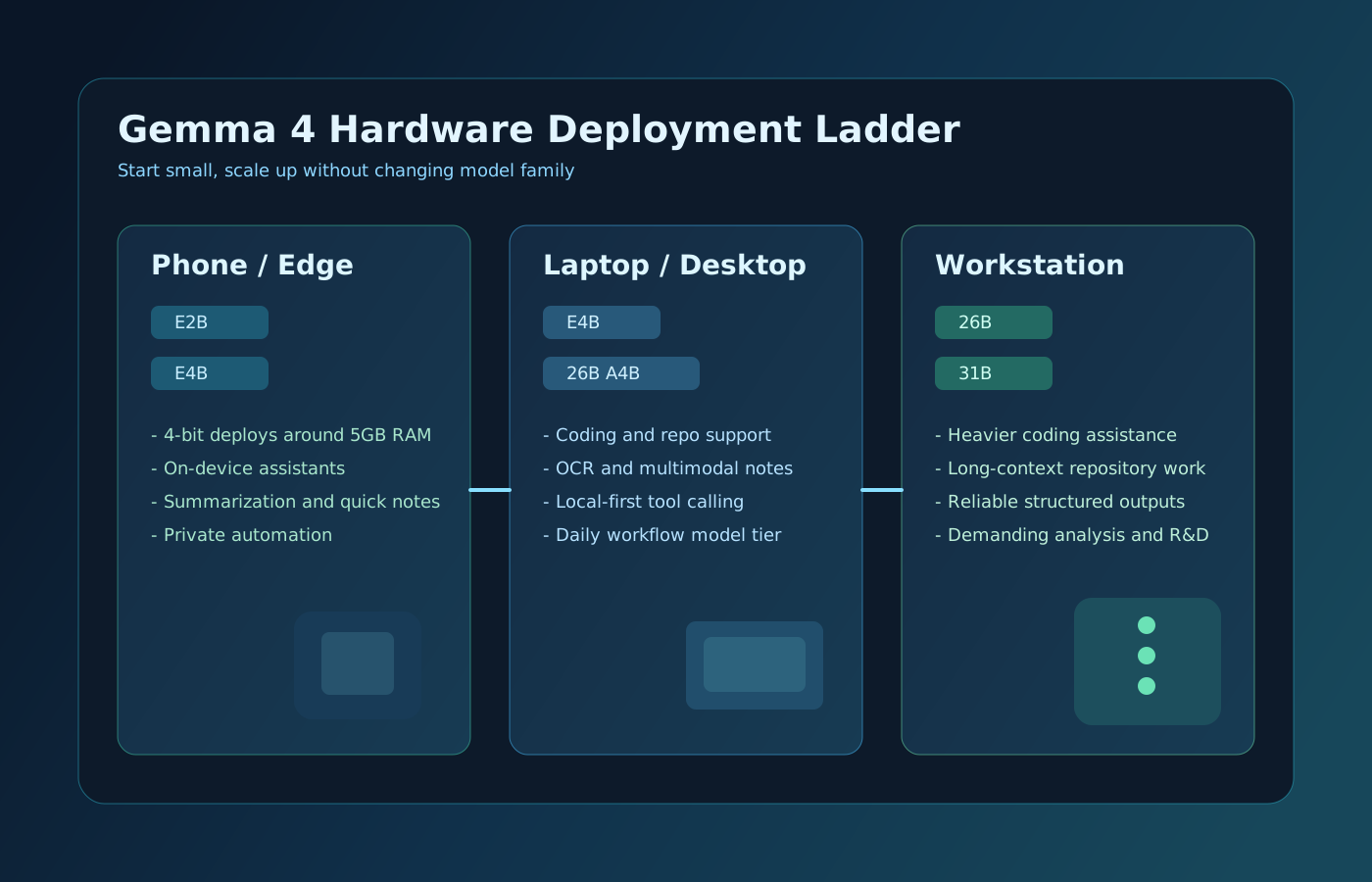
Gemma 4 is a family, not a single model: E2B, E4B, 26B A4B, and 31B. The edge models target phone/laptop style deployment, while 26B and 31B target stronger desktops and workstations.
This gives a clean deployment ladder:
- Start on a phone, mini PC, or lightweight laptop setup.
- Move up to a stronger laptop or consumer GPU desktop.
- Scale to a workstation for stronger reasoning and coding quality.
That continuity keeps experimentation cheaper and production planning less chaotic.
It is built for more than chatbot demos
Google describes Gemma 4 around reasoning, function calling, structured JSON output, native system instructions, long context, and multimodal work. That package maps directly to modern agent workflows.
In everyday use, that means:
- Local coding help against repositories without sending code to third-party clouds.
- Offline document, image, and OCR workflows on workstations.
- On-device assistants for phones, kiosks, and embedded systems.
- Local-first automation where tool use and structured output matter more than chat polish.
Unsloth's early guide adds the hardware reality check: E2B and E4B can run from roughly 5GB RAM in 4-bit form, while larger variants step into stronger but still reachable local hardware tiers.
For many developers, that is the difference between a nice announcement and a real weekend project.
Why This Is Happening Now
Local AI has been waiting for a coherent model family across devices. Many launches create hype, then fragment into runtime incompatibility, awkward quantization paths, and vague hardware guidance.
Gemma 4 landed differently because the tooling story was visible immediately.
Tooling is finally catching up to model launches
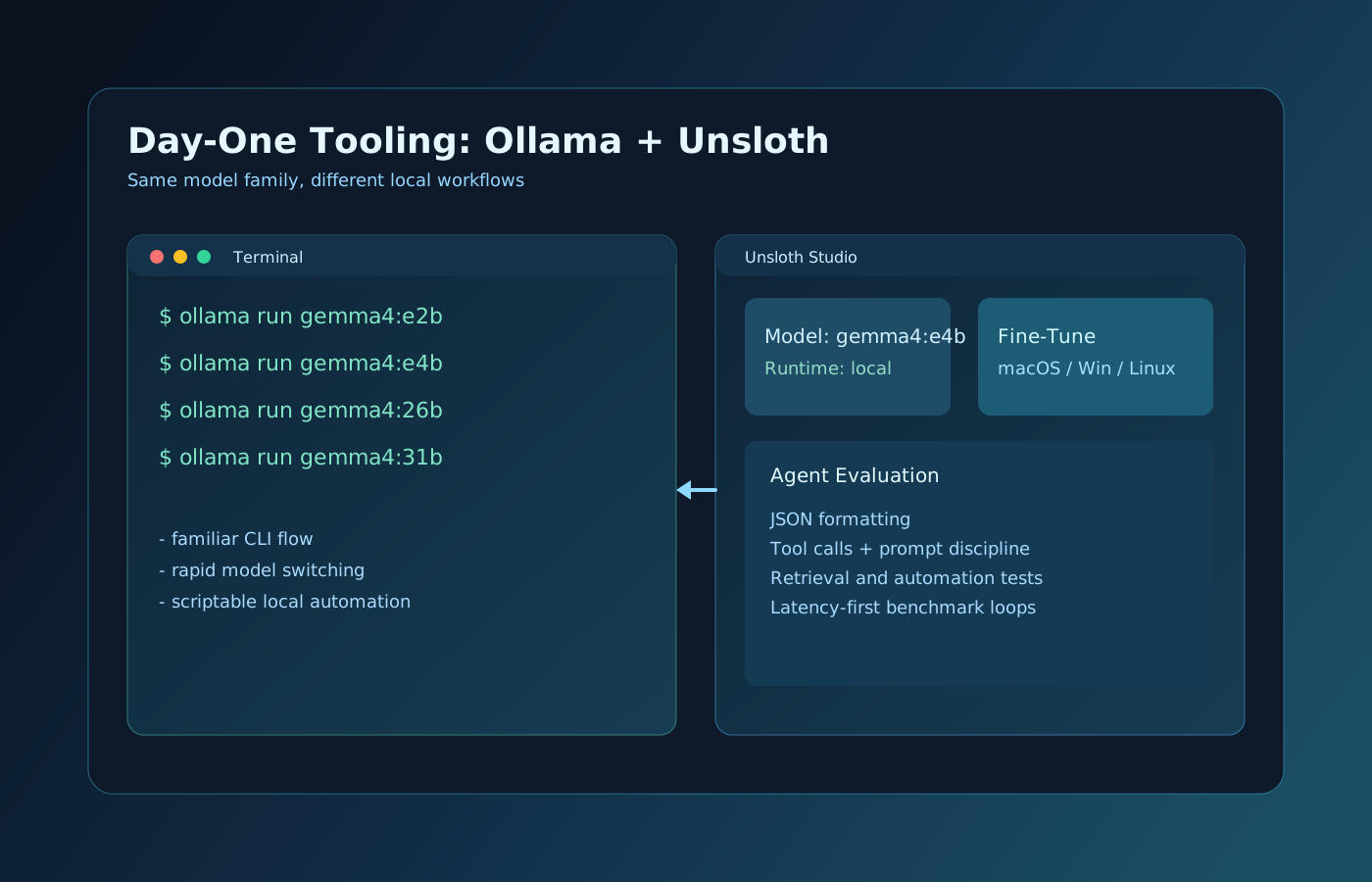
Ollama already exposes direct commands for Gemma 4 variants, lowering the test barrier with a familiar interface:
ollama run gemma4:e2b
ollama run gemma4:e4b
ollama run gemma4:26b
ollama run gemma4:31b
Unsloth extends the practical path by placing Gemma 4 inside an open-source local UI for running and fine-tuning across macOS, Windows, and Linux. Together, these tools shift Gemma 4 from research release to a practical local stack.
How To Choose the Right Gemma 4 Starting Point
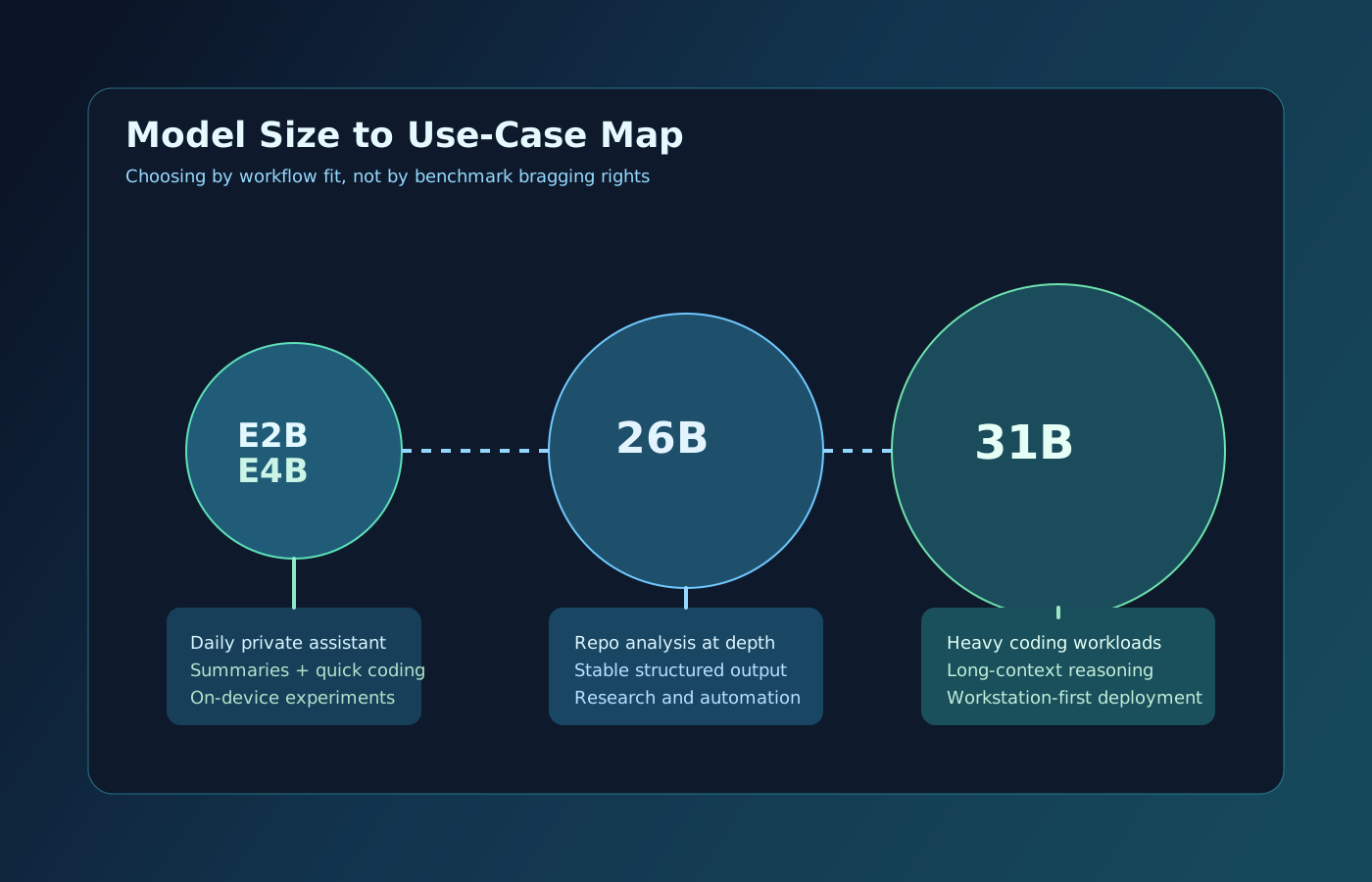
A common mistake is assuming the biggest model is always the best place to begin. In local AI workflows, the best model is usually the one that stays fast enough to remain in your daily loop.
Start with E2B or E4B if you want actual daily use
The smaller edge models are the most interesting for broad adoption because they have a realistic chance of staying fast on modest systems. They fit many common local-AI tasks:
- Summarization
- Lightweight coding help
- Multimodal note processing
- On-device experimentation
- Private automation
Move to 26B or 31B when quality matters more than convenience
The larger models are where Gemma 4 competes more aggressively on reasoning and coding quality. They are better for:
- Heavier coding assistance
- Longer-context repository work
- More reliable structured outputs
- More demanding research and analysis tasks
The tradeoff is straightforward: more hardware, more memory pressure, more patience.
Where Gemma 4 Fits in the Larger Open-Model Trend
The open-model conversation has split into two camps:
- Huge models that look impressive but are hard for most people to run.
- Smaller models that are accessible but often too compromised for real work.
Gemma 4 is interesting because it tries to narrow that divide. Google's framing emphasizes intelligence per parameter, not only raw scale, for teams that value local execution, sovereign deployment, and cost control.
Practical Takeaways for Developers and Power Users
- Pick the runtime you already know. Use Ollama if that is your current path, or LM Studio/Unsloth if you prefer desktop-first local testing.
- Benchmark latency before bragging rights. A responsive model you keep open all day often beats a stronger model you avoid using.
- Evaluate tool use and structured output, not only chat quality. Include JSON formatting, retrieval steps, prompt discipline, and simple automation tests.
- Keep one eye on memory footprint. The smartest local model is the one your machine can run without turning the rest of your workflow into molasses.
The Bigger Meaning of This Release
Gemma 4 matters not because local AI is solved, but because local AI starts to feel normal. Broad tooling, sensible hardware tiers, and a credible path from edge to workstation make it easier for developers to build durable local-AI habits.
Those habits matter more than launch-day hype because habits become infrastructure.
If this momentum holds, 2026 may be remembered as the year local AI stopped feeling like a side project and started feeling like standard developer infrastructure.
Conclusion
Gemma 4 is one of the clearest signs yet that local AI is maturing from enthusiast experimentation into a practical software layer. The family spans realistic hardware tiers, supports agent-style workflows, and shipped with ecosystem support that makes local testing easy.
For most developers, the right question is not whether Gemma 4 beats every rival on every chart. The better question is whether this is the first open model family that genuinely fits how they want to work. For many teams in 2026, the answer may be yes.
More From ToolMintX
Other Blog Posts
June 2, 2026
NVIDIA RTX Spark AI Laptops and Workstations: What Launched
NVIDIA RTX Spark brings Blackwell AI laptops and compact desktops to Windows, while DGX Spark and DGX Station define the local AI workstation tiers.
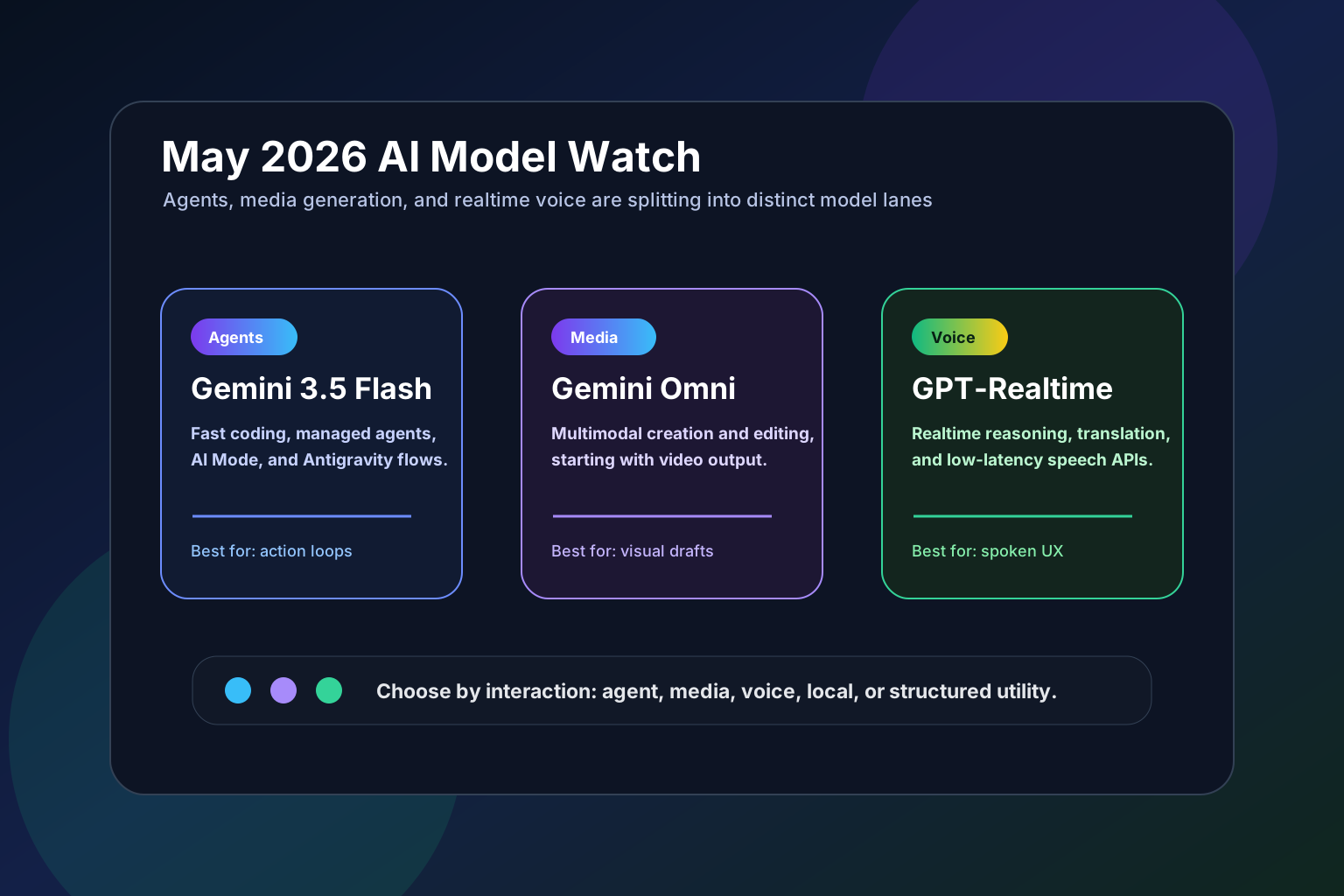
May 27, 2026
May 2026 AI Model Watch: Gemini 3.5 Flash, Gemini Omni, and GPT-Realtime
Compare the current AI model wave across fast agents, multimodal media generation, and realtime voice APIs for practical product choices.
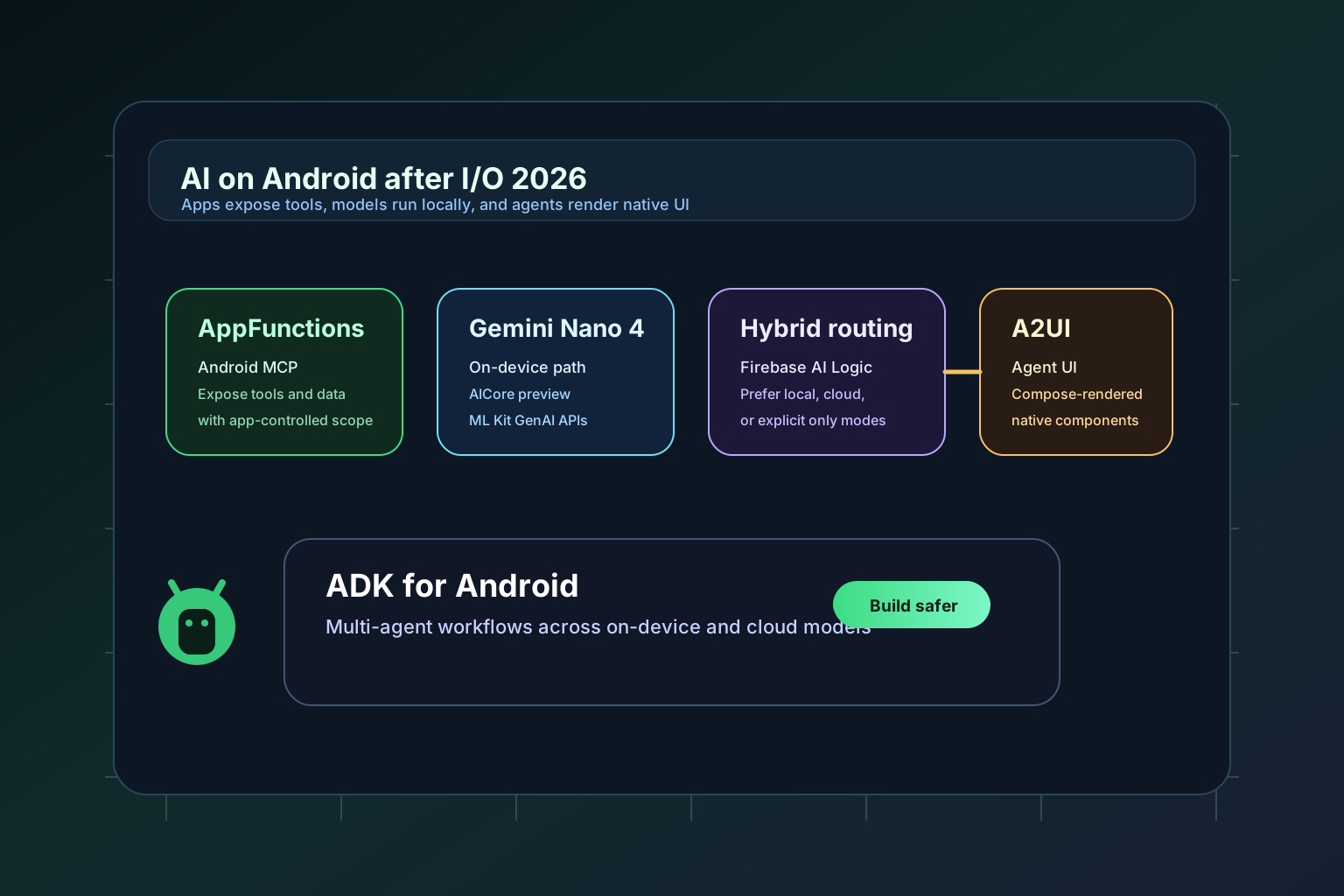
May 27, 2026
AI on Android After I/O 2026: AppFunctions, Gemini Nano 4, and Hybrid Agents
Android AI updates now give developers AppFunctions, Gemini Nano 4, ML Kit GenAI, hybrid inference, A2UI, and ADK for app agents.